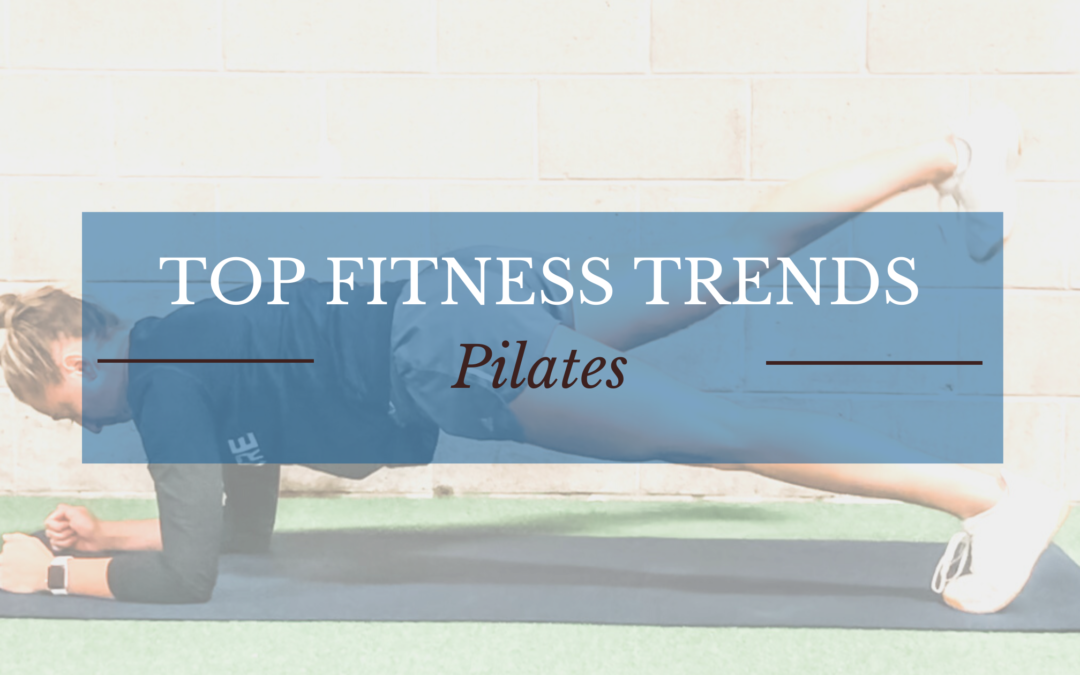
PILATES: WHAT IS IT? SHOULD I BE DOING IT?

PILATES: WHAT IS IT? SHOULD I BE DOING IT?

Just like finding the perfect outfit to wear, picking out the right exercise method to fit your lifestyle and goals is tailored to the individual. Due to people’s different goals and a wide range of interests there are a plethora of fitness classes, trends, and workouts available to the public. HIIT workouts, circuit training, pilates and more.

Exercising is for you and your body to make you feel your best. Just like putting on the perfect outfit! Not only does the exercise method have to match what you want to achieve, but you also have to enjoy it. If you loathe your workout it just gives you an excuse to skip it. It can be tough to find this perfect fit when it comes to exercising. Did you know that your personality plays a huge role is this?

Pilates has been one of the most popular fitness trends not only because of physical benefits, but because of the mental relaxation as well. The question is, is this just a craze? Or is it what you are missing in your workout routine? Let’s dive in and discover a bit more about Pilates.

WHAT IS PILATES?

Although Pilates has really become popular amongst celebrities and gyms everywhere, it has been around since the 1920s. Named after Joseph Pilates who founded the practice, Pilates focuses on specific exercises and movements coupled with a focus on breathing. It also puts emphasis on stretching while developing strength, stability, and balance.

We often talk about how important these factors are in your workout routine. And they become increasingly important as you age. Read more on exercising as you get older.

In fact, “Contrology” was the original name of the practice because of this focus on how you must control your body through breathing and throughout the movements. Many have compared Pilates to yoga, but with more fluidity through each pose or exercise. The biggest focus here is on technique and doing the movements precisely.

Classes usually range from about 45 minutes to an hour and go through a sequence of poses without holding as yoga does. This offers more of a challenge to the body with breathing techniques and engaging almost all of your muscles as you go through many of the poses.

There are different forms of Pilates of which the two most common are Reformer and Mat. Reformer uses equipment such as resistance bands, foot pads, a moving carriage, and straps all on one apparatus. Mat is simply that. It is done on a yoga mat with just your body as you are guided through the exercises. This is generally more accessible to people through video services or at-home Pilates.

BENEFITS OF PILATES

Pilates has a big following because of its’ emphasis on core strength and using body and mind in alignment through the class. Many have seen this as a great transition into the exercise realm when coming from classes like yoga.  There is a large draw to it for these reasons.

Other benefits include the focus on improving posture and flexibility and a big one is that it is a form of low impact training.

As discussed earlier, it is important to find an exercise mode that is suited for your needs and your desires to get active. You should not just focus on why you like it, but why it is beneficial for your body. Evaluate adding Pilates to your workout by deciding if these benefits match your goals. It is also important to look to see if the pros outweigh the cons.

DOWNFALLS OF PILATES

When you look at just the benefits of something it is easy to get a cloudy judgement. On paper, Pilates seems like an amazing way to get active. And it is! But we have to come back to the goals here. If your goal is to drop that number on the scale or see large muscular gains, Pilates may not be for you.

After all, in Pilates you are doing bodyweight exercises. You will not be able to get extreme muscle definition or strength from bodyweight. Even if you add in resistance bands or other equipment seen in reformer type Pilates, you still have a cap as to where your gains can go.

In addition, if weight loss is your goal, Pilates will most likely get you to where you want to be. Incorporating aerobic activity along with strength training will create a more well-rounded workout program. Pilates is a great supplement but doing it as your only form of exercising may not be what your need.

Pilates is a very technical and precise workout. It is not so easy to just jump into an advanced workout without proper knowledge of the exercises and order. This is not uncommon when it comes to different forms of exercises. But when you think of something like a cycling class you can understand the simplicity of hopping on a bike to join a class.

This is not to discredit Pilates, but to ensure that when you are finding the right fit for your workout you consider all the angles!

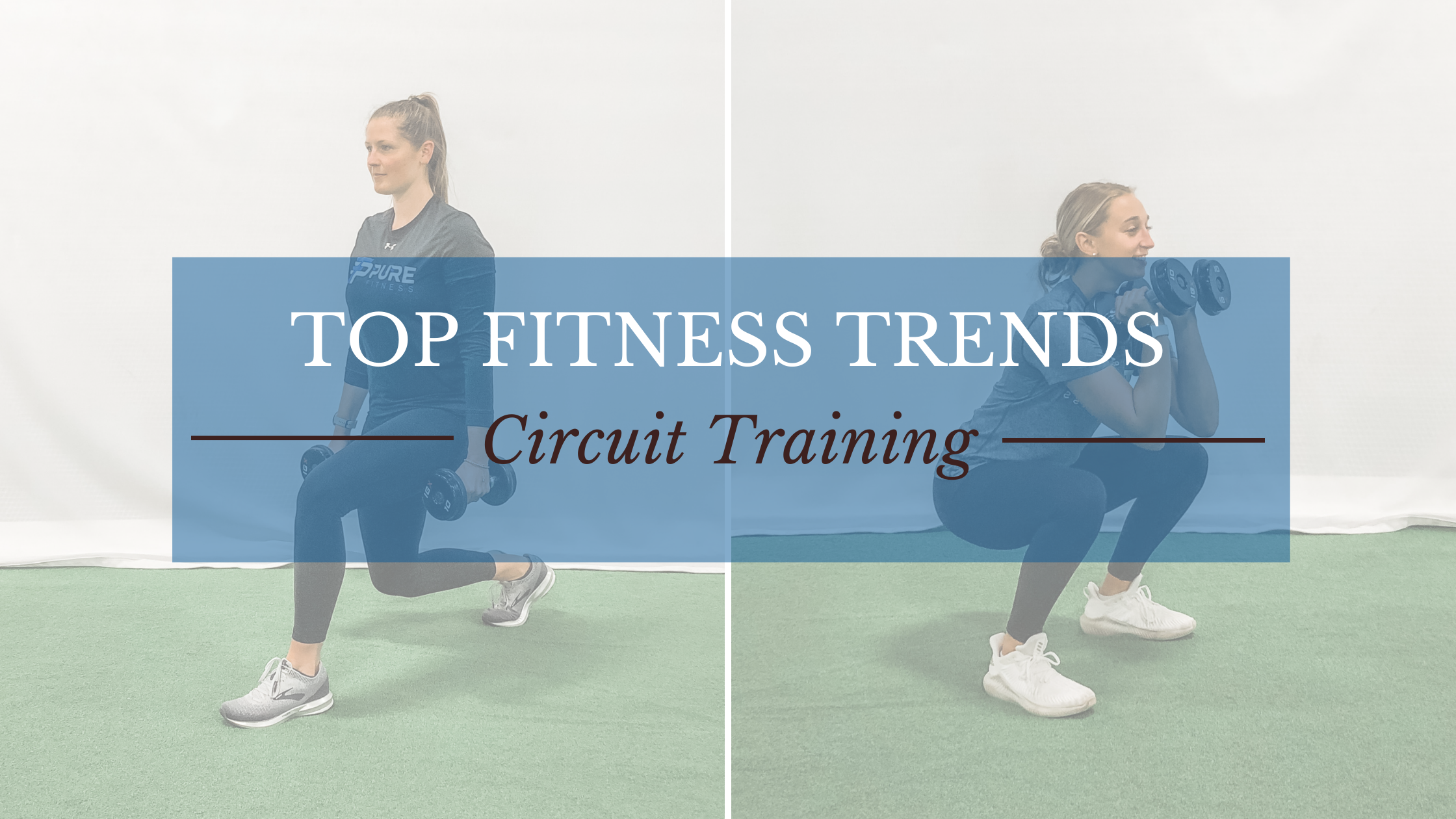
If Pilates isn’t your thing and you want a more intense form of exercise, maybe circuit training is more your speed. Go at your own pace and pick a couple of exercises to tailor to your time frame.

WHAT NOW?

I would like to emphasize that Pilates has its place in the world and the importance it puts on core and flexibility is spot on. The important things I wanted to bring to light here is that you consider your why when doing a workout. Whatever your reason for working out make sure that is in line with the workout itself, that your are enjoying it, and ultimately it is doing the RIGHT things for your body in the end.

How Personal Trainers Can Attract Clients Consistently  

How Personal Trainers Can Attract Clients Consistently  

Building a thriving personal training business is no small feat, and for many trainers, the fear of not attracting enough clients is all too real. Consistently bringing in new clients while keeping current ones loyal is the key to growing your fitness business and...
read more
How to Maintain Golf Fitness During the Off-Season

How to Maintain Golf Fitness During the Off-Season

The off-season is a crucial time for golfers to focus on maintaining and even improving their fitness levels. Staying in shape during this period not only helps prevent injury when the season resumes but also gives you a competitive edge. We are going to walk through...

read more
fitness articles
lifestyle articles
nutrition articles
golf articles

SUBSCRIBE

Click to sign-up for weekly information and offers.

DISCLOSURE

We are a participant in the Amazon Services LLC Associates Program, an affiliate advertising program designed to provide a means for us to earn fees by linking to Amazon.com and affiliated sites.

Tabata Workouts: Is 4 Minutes a Day too Good to be True?

Tabata Workouts: Is 4 Minutes a Day too Good to be True?

If you are like me, the first time you heard the word Tabata you thought it was some form of martial arts. Back then, I honestly had no clue what it meant and frankly did not care to know. For those of you who are familiar with Tabata workouts, you know that it is not martial arts but actually a version of HIIT (High Intensity Interval Training) workouts.

It was actually named after the professor Izumi Tabata who was studying higher intensity interval training using Olympic speedskaters who were performing the study on a stationary bike. This was back in 1996. It has now become one the more popularized methods of interval training out there today. But what separates Tabata as a style of HIIT. What makes it so special?

Wait, if you aren’t even sure what HIIT is you should read about HIIT. It lays the foundation for everything you are about to read.

DEFINING TABATA WORKOUTS

The parameters of the original study involved the athletes doing 20 seconds of high intensity and 10 seconds of rest. During the high intensity part of the workout your VO2 max is going to be at 170%. Recall here that VO2 max is the volume of oxygen that is being transferred and utilized within the body during exercises. This 20 seconds on, 10 seconds off was done for 4 minutes.

Through the study, they found that with this method, they were able to achieve similar increases in VO2 max and aerobic capacity as a longer duration of cardio at a steady intensity. They also were able gain anaerobic capacities as well! Exciting results that explain why intervals are used to improve athletic performance.

So, yes, this falls within the umbrella of HIIT training due to its nature of having a section of high intensity, followed by low intensity. However, this one is only for 4 minutes! I mean come on, working out has never been easier right!?

LET’S GET REAL

Alright so Tabata workouts sound like a dream. 4 minutes a day. And you get the same benefits as someone who worked out for an hour? SIGN ME UP.

Sorry to burst your bubble, but this is not entirely the case. Let’s look at the facts here. The benefits from the study were based off of a VO2 max of 170%. Although we cannot accurately measure this at home, let’s compare to the other HIIT workouts we have done. They require you to only be at 90%.  We have already talked about how much effort needed to get there and how difficult it is.

And looking at the Tabata study, they were using Olympic athletes. Chances are, if you are reading this article then you are not training for the Olympics. I mean, if you are then I am honored (I’m looking at you Gabby Douglas). Most of us will probably never come near that level of maximal effort, let alone in the 20 second range. Not to mentioned this was in a lab under very controlled conditions. So really we will probably not be able to do a TRUE Tabata workout.

CAN I STILL GET RESULTS FROM MY TABATA WORKOUTS?

Now that I have just told you none of you are actually doing Tabata workouts, I do want to give you a bit of hope here. You can still do a Tabata-inspired workout! This is just going to fall into the category of HIIT using 20 seconds on and 10 seconds off. You just aren’t going to be operating at that 170% VO2 max effort.

The bigger focus here, as with HIIT, is giving that maximal effort that you have for those twenty seconds of work. If you are able to do that, you will still be able to get a great workout in those four minutes! You can measure this level of effort through your heart rate. Due to the popularity of fitness trackers and the growth in technology this is easier than ever.

I use an apple watch as my preferred choice due to the easy pairing with my other devices and the ability to track different types of activities (including a setting for HIIT).

These are affiliate links. While there is no cost to you when you order through them, I do make a commission. Your support, by ordering through them, is greatly appreciated!

Other options include a fit bit or a polar watch, depending on what look and function you are looking for! Here are links to both.

The benefits here are going to mimic that of HIIT workouts, because as we explained earlier, Tabata workouts are under the umbrella of HIIT. Other benefits include it being so short! Only 4 minutes for a Tabata workout!

HOW CAN I DO “TABATA” WORKOUTS AT HOME?

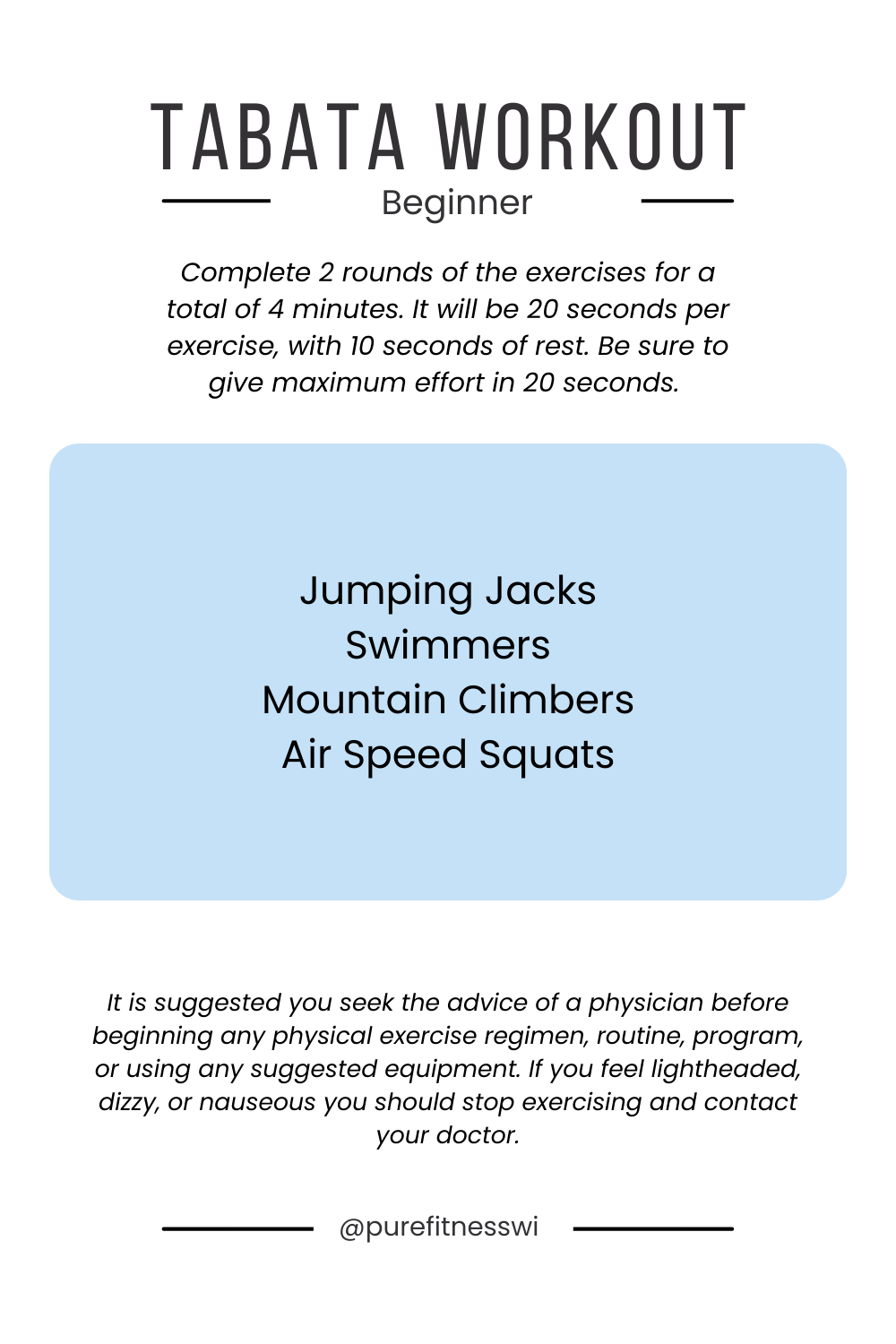
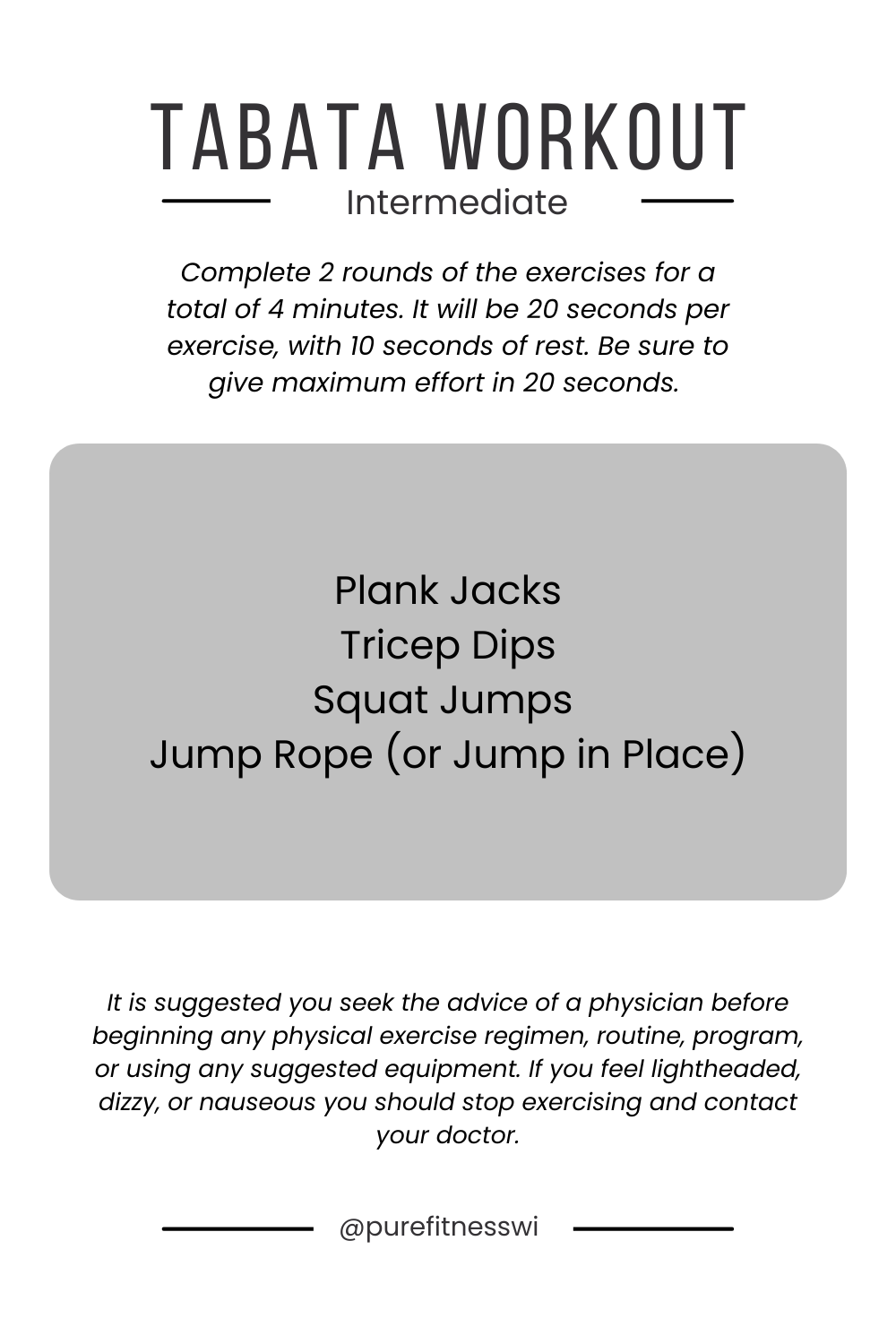
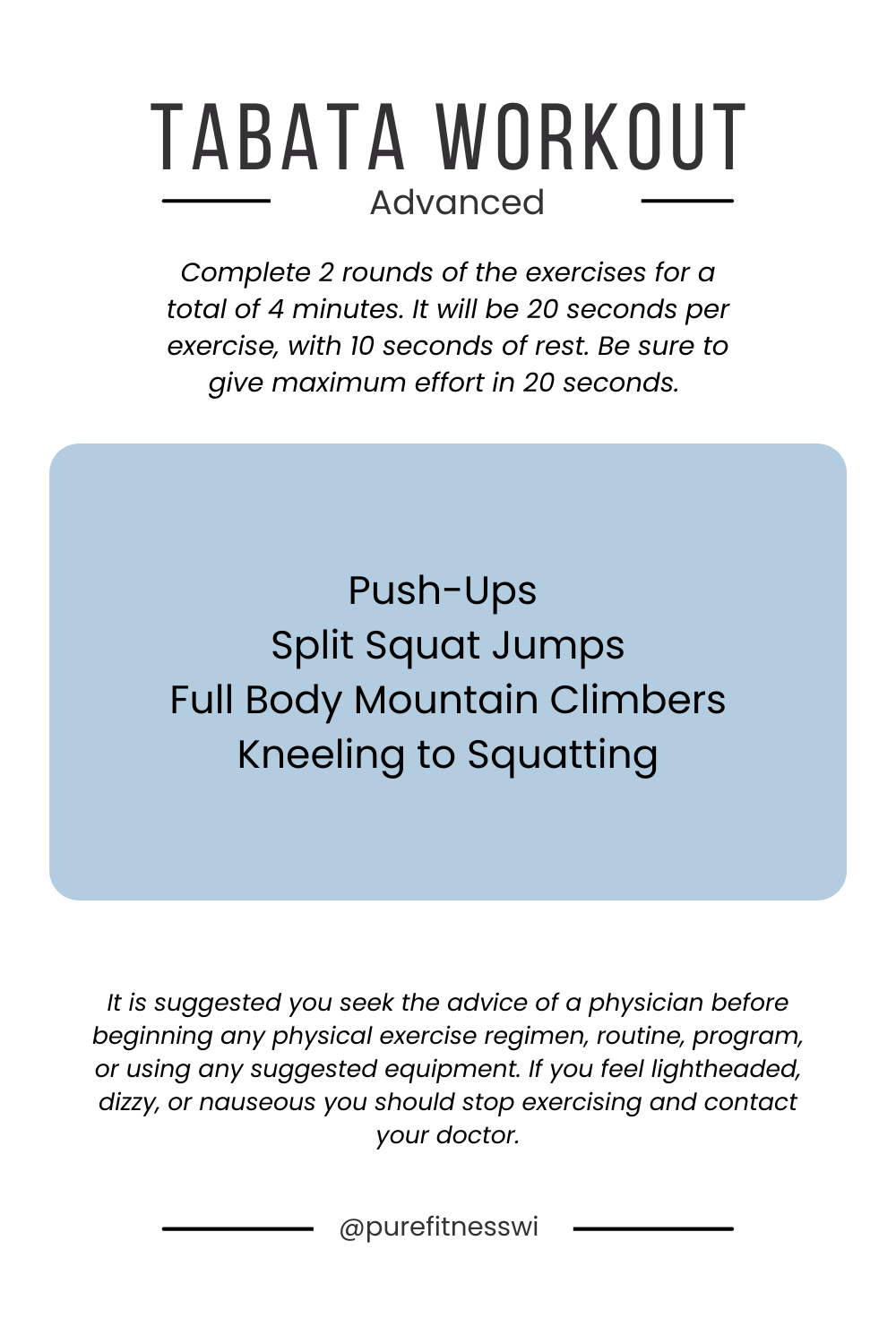
Here are three workouts that can be done at home to mimic the Tabata type style of training. They are going to add in a bit more muscular strength for a total body workout! Keep in mind it is important to give maximal effort in the twenty seconds and rest fully for the 10!

Most of these are not going to require any equipment! However I do recommend having these items on hand before you begin.

A Yoga Mat or a Large Exercise Mat for comfort when doing your at-home Tabata workout. Especially if you are on a hard wood floor these are a life saver. The yoga mats is the most common and cheap, but if you are an avid at-home gym go-er, you might want to consider investing in this larger mat!

For myself, I like to bring this Hydroflask Water Bottle, this Lululemon Headband, and of course my airpods for picking the about two songs to crush my 4 minute Tabata workout. I love these items because the water bottle keeps my water cold, the headband keeps the sweat out of my eyes and my airpods keep me going even when I’m tired!

You will also need this Jump Rope for the Intermediate workout because not only does it have comfortable handles, but it is adjustable as well! I would recommend this Stability Pad for the advanced workout for the kneeling to squatting exercise. This one can be rough on the knees even with a yoga mat!

It should be reiterated that this is not actually a Tabata workout! This is just a style of HIIT that you can try at home! Get creative with what you want to put into your workouts and make them enjoyable so you can get the most out of your workout!

As with HIIT training, it is important to recognize that you should not do a Tabata workout everyday. Even in the original study, the athletes did not perform the workout every single day. This is a great method of exercises to fit in on the days that you are not strength training and need a cardio workout, but don’t have a ton of time!

How Personal Trainers Can Attract Clients Consistently  

How Personal Trainers Can Attract Clients Consistently  

Building a thriving personal training business is no small feat, and for many trainers, the fear of not attracting enough clients is all too real. Consistently bringing in new clients while keeping current ones loyal is the key to growing your fitness business and...

read more
How to Maintain Golf Fitness During the Off-Season

How to Maintain Golf Fitness During the Off-Season

The off-season is a crucial time for golfers to focus on maintaining and even improving their fitness levels. Staying in shape during this period not only helps prevent injury when the season resumes but also gives you a competitive edge. We are going to walk through...

read more
fitness articles
lifestyle articles
nutrition articles
golf articles
Circuit Training: Fact VS Fiction

Circuit Training: Fact VS Fiction

Ever wonder what all these fitness trends mean? Circuit training is probably one of the most used fitness trends that you will see applied “differently” at various establishments. Let’s break down circuit training – what you need to know before starting your workout.

When you think of a great workout, what do you think of? Most of you would answer that question in three ways. One, you work up a great sweat. The mindset of “if I am not drenched in sweat by the end of this workout I have not done enough”. Two, it is fast paced with little time for water and rest. You envision yourself pushed to the limit. Three, you are sore beyond belief. You are barely able to walk or even do everyday activities the next day.

As a lot of us have been taught, a great workout results in those three things, or at least one of them. It doesn’t matter what we do, how many sets we do, what our form is like, or any of that. This has been the way we have been taught. That attention to detail and the individual doesn’t matter as long as everyone leaves believing they have accomplished one of those three goals. Better yet, all three of them.

But are those the right goals? Or are there other things for you to consider?

DEFINING CIRCUIT TRAINING

All circuit training means is the format of your workout. It is grouping together a handful of exercises in a list, going through them, and then heading back to the top. You move efficiently from exercise to exercise and your larger rest period will come at the end. In fact, HIIT training can be done in a circuit format.

To build a circuit, you would group together a couple of exercises, say an upper, a lower, and a core. Or you could create a muscle group burnout and do a couple of lower body exercises to condense your leg day into a focused circuit. If you search circuit training on the internet, they will tell you it has to be full body. THIS IS FALSE. Targeting one muscle group can still be a circuit and it is actually an effective way to overload.

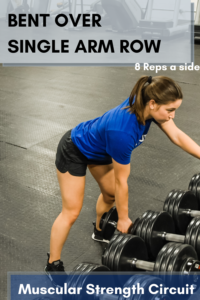
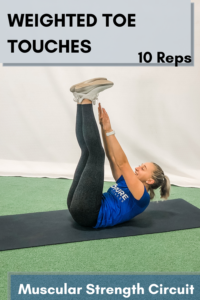
If your focus is on muscular strength, you might create a shorter circuit of only 5 exercises with a bit more rest in between each exercises and round. You would increase the weight used for a moderate to low rep count.

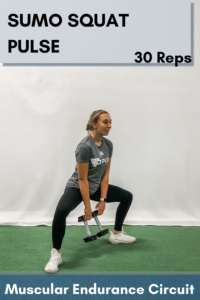
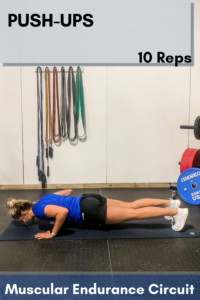
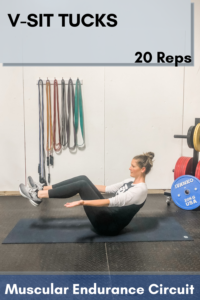
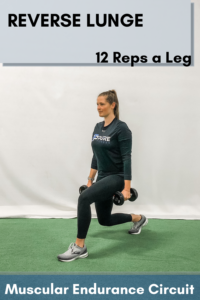
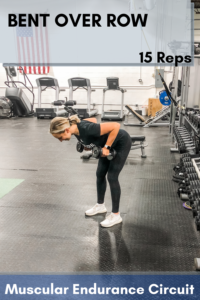
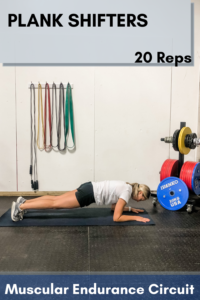
If your focus is more muscular endurance, you would manipulate the rest intervals to be shorter. You might also choose lighter weight and even body weight exercises for a high rep count.

WHERE CIRCUIT TRAINING GOES WRONG

Often times the popularized group fitness classes focus on how they can get your heart rate up through cardio intervals and sprinkle in some resistance. The emphasis is put on how fast and hard you can push yourself, not on how you are performing the exercises.

This is a dangerous mindset to have for every workout you do. It increases the likely hood of injury (minor to major), it encourages bad form or creates bad habits, and it limits your body’s ability to adapt and recover.

Do not get me wrong, I understand that these group classes can be effective. Circuit training has its place in the world and in your workout routine. I am not here to bash the workouts you have come to enjoy. I myself have found these group circuit training classes to be fun, challenging, and effective for getting a great workout in.

However, these exercises routines are taxing on your body when they are done everyday. They tend to rely heavily on one energy system. Typically they do not focus much on strength training in an intentional way with correct form. There is not enough emphasis on exercises selection to build range of motion, stability, and strength, which are keys to a well-rounded and balanced program.

In is important to note, that circuit training can be used in a less intense manner. You do not have to kill yourself at a high tempo pace. I recommend alternating your workout tempo or speed for the best results physically and increase your consistency.

BENEFITS OF CIRCUIT TRAINING

Circuit training is effective and efficient when done correctly. In fact, I use circuit training in the gym almost every day. Tempo and repetitions are adjusted to purposely work on different energy systems.

The great part of doing a circuit for your workout is you get to choose what you want! If you want to focus on upper, lower, total, or core you can create that circuit to do just that. If you are searching to build your muscular strength or endurance, you can make it focused as such. The possibilities are endless when deciding where you want your circuit to take you.

The other great part about circuit training is it can fit in the time slot you set. If you have twenty minutes you can do one circuit, 4 times through! Or if you have an hour to workout, you could even do 3 circuits, 3 times through! It is completely under your control.

As I said before, the possibilities are endless for circuit training. You can create thousands of different combinations and types of workouts with all the freedom it entails. The important thing is to do the exercises right and create a balanced program!

WHERE TO START

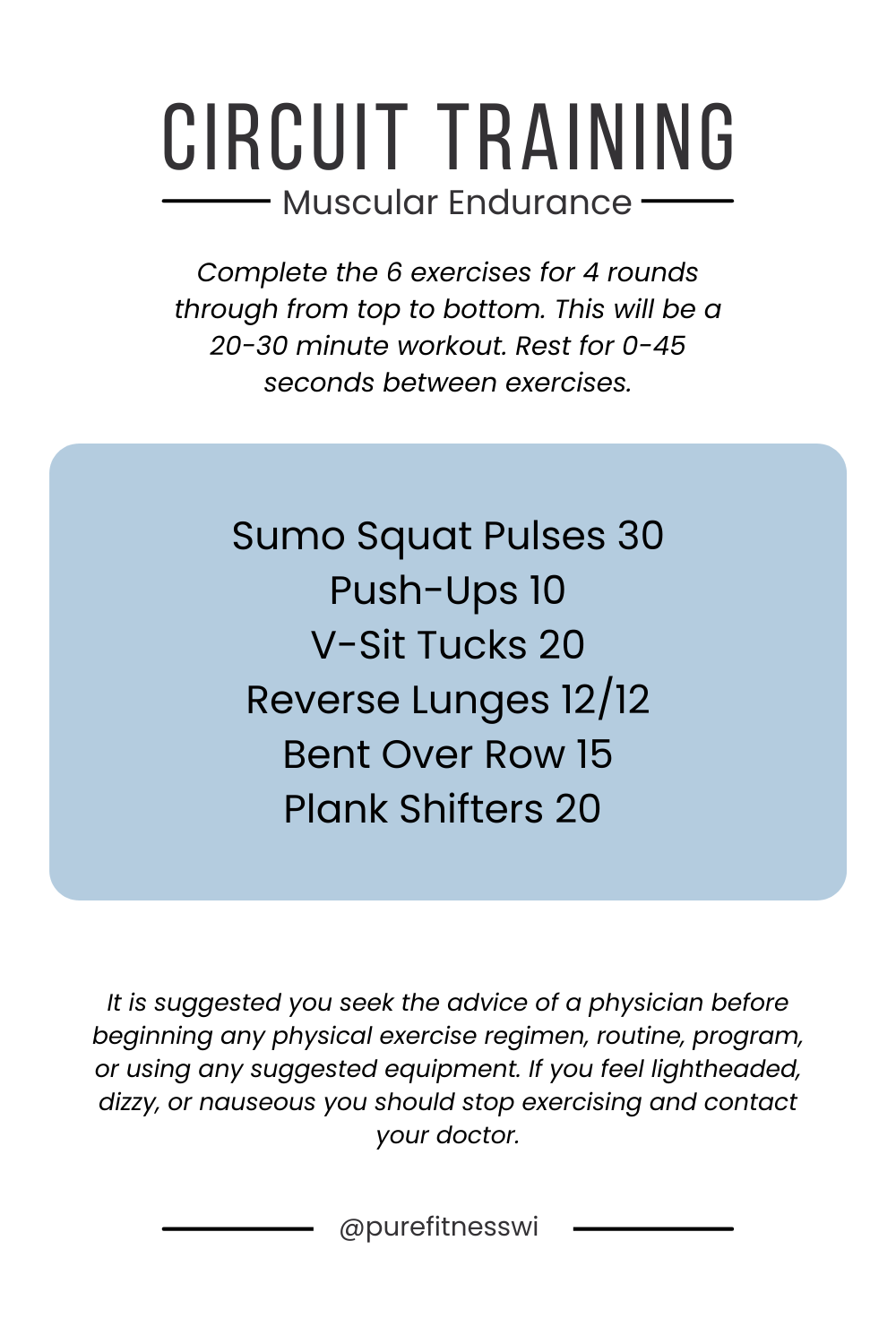
Here are some options for circuit training that build in the correct balance, still give you a great workout, and will develop you in every area essential for overall well-being! I have split these up into muscular strength and muscular endurance circuit training workouts. 30 minutes each. They are total body workout, but as I said you can develop these into anything you want. Scroll down to download each workout.

Muscular Strength

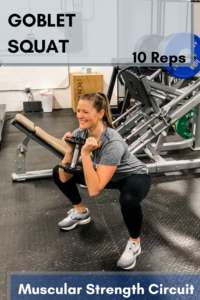
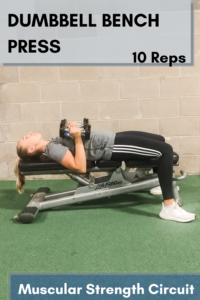
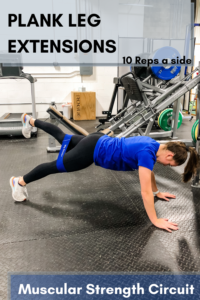
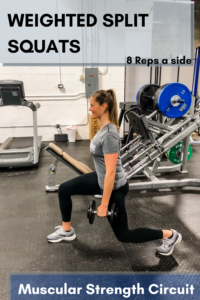
This is a circuit of 6 exercises and you will go through 3 times for a 20 to 30 minute workout. Your rest periods will be about 90 seconds in order to stay in the muscular strength window. You will want to weight these exercises a bit heavier because the rep count is lower! Shop dumbbells and a hip circle for leg extensions.

Muscular Endurance

For this one it is going to be 6 exercises again, this will be for 4 sets total. These are going to be higher rep and are going to have shorter rest periods in order to work in the muscular endurance stage. These rest periods are going to be in the 0-45 second range. These should be weighted moderately.

These are just examples of how you could build a circuit based upon every energy systems. As I stated, the sky is the limit for how you can create a circuit. Just be sure to be intentional with your programming and have a goal in mind when deciding what you want out of your workout. You can create a difficult, sweaty, and effective workout while still maintaining great form and proper programming!

How Personal Trainers Can Attract Clients Consistently  

How Personal Trainers Can Attract Clients Consistently  

Building a thriving personal training business is no small feat, and for many trainers, the fear of not attracting enough clients is all too real. Consistently bringing in new clients while keeping current ones loyal is the key to growing your fitness business and...

read more
How to Maintain Golf Fitness During the Off-Season

How to Maintain Golf Fitness During the Off-Season

The off-season is a crucial time for golfers to focus on maintaining and even improving their fitness levels. Staying in shape during this period not only helps prevent injury when the season resumes but also gives you a competitive edge. We are going to walk through...

read more
fitness articles
lifestyle articles
nutrition articles
golf articles
HIIT Workouts What Are They And How Can I Do Them Better?

HIIT Workouts What Are They And How Can I Do Them Better?

If you are like me, you enjoy getting in a great sweat from your workout. You regularly are in the gym working on your resistance training and it is great! You feel strong and powerful afterward. Your muscles are sore, and you can barely walk after one of these intense workouts. But you feel like something is missing from your workout program. Upon further investigation, you discover that cardio is never in your workouts. You get bored of running for long periods of time and riding a bike for an hour hurts your butt. You think to yourself, this can’t be the only way for me to build up my endurance. The answer is right under your nose, High-Intensity Interval Training (HIIT).

WHAT ARE HIIT WORKOUTS?

I think at this point almost everyone has come into contact or heard of HIIT or High-Intensity Interval Training. However, not everyone is well-versed in the parameters of HIIT workouts. Which means that most people, and probably you, aren’t actually doing a HIIT workout. And that means you aren’t maximizing the full potential of a HIIT. Keep reading and get more details under “drawbacks”.

The goal of HIIT is to maximize a person’s aerobic capacity. This means your working sets (i.e. the high intensity portion) must be greater than 90% of your VO2 max with recoveries at less than 40%. VO2 max is the volume of oxygen that is being transferred and utilized within the body during exercises. These sections of higher intensity should alternate with the sections of lower intensity. They should be pre-planned to ensure you are getting the proper amount of recovery as well as the most out of your working sets.

WHAT IS THE OBSESSION WITH HIIT WORKOUTS?

People have come to love this style of workout for many reasons. One being that they feel they are getting the most out of their workout because of the amount of sweat and exhaustion they feel afterward. HIIT can be done through many different modes of exercise including at-home cardio workouts.

Another reason why these types of workouts are so popular is because they can be modified to meet anyone at their fitness level. Because it is a workout tailored to finding your limit, it is adjusted to each person. Depending on where you are at in your aerobic capacity, it may be easier to get up into that target range! If you do not feel like you are giving about 90% of your effort, it is time to speed it up or add more weight.

The other great part about a HIIT workout is that it saves time. Although you are working to build up your aerobic capacity, you are no going out and taking an hour run. Instead you can build up your endurance without having to block off half of your day for a workout.  HIIT provides the same about of adaptations to your body that long and slow endurance training can. But it saves you time!

WHAT ARE THE DRAWBACKS?

HIIT is almost always misinterpreted and done wrong! Since the average person doesn’t A.) know their VO2 Max and B.) have the ability to measure it during exercise accurately measuring HIIT at home is impossible. The good news is that we are trying to get the most out of our workouts to stimulate an adaptation, not be perfect in VO2 number range.

The way to do this is by pushing yourself to get into the upper range of your heart rate zones (way more manageable to monitor than VO2 Max). Through higher rep counts or more resistance, you can get yourself there. As we mentioned before, this is where HIIT workouts can meet a person where their fitness level is at. A highly conditioned athlete can do more reps in the timed interval than a de-conditioned athlete. But both, if pushing to the 90% range and resting appropriately, can stimulate a physiological adaptation.

Your target heart rate is specific to the individual. It can be dangerous to push your heart rate higher than it is supposed to go and medications you are taking can impact your ability to get a true heart rate reading. If you are highly de-conditioned or on medication you should consult a medical professional before trying a HIIT workout.

Another key component that is missed is REST. Your heart rate has to come back down. If it is not you will not be able to sustain the same level of output, or work. And sustaining your workout output is important in producing the physiological adaptation. So as much as you are watching your heart rate to see it elevate, you need to watch it lower as well.

How to find your max heart rate?

You can find your projected max heart rate by taking 220 minus your current age. If you are feeling like you are light-headed, dizzy, or faint, then it is time to stop the workout. And remember if you are on any medication measuring your heart rate at home can give you skewed results.

HOW TO USE HIIT WORKOUTS AT HOME

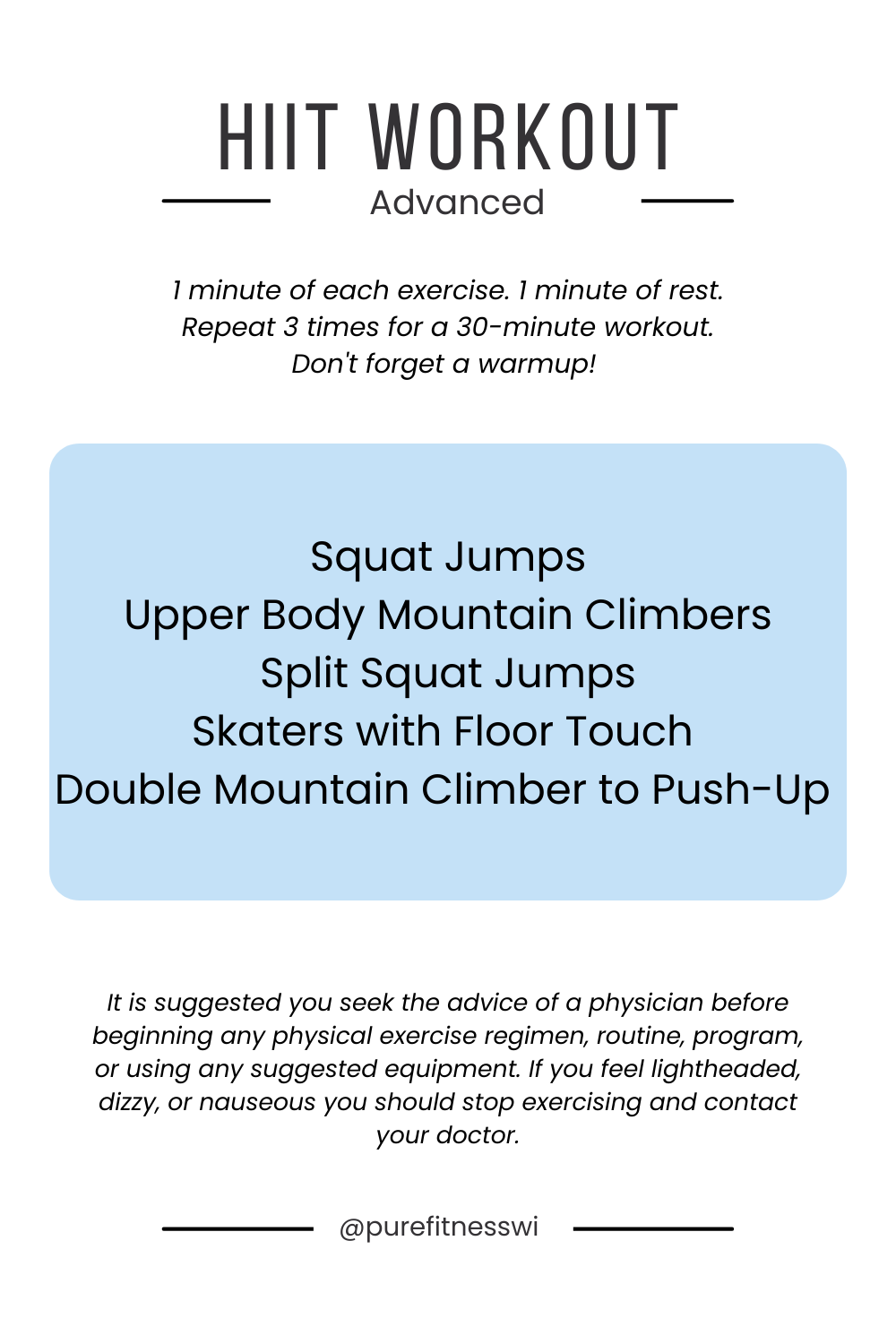
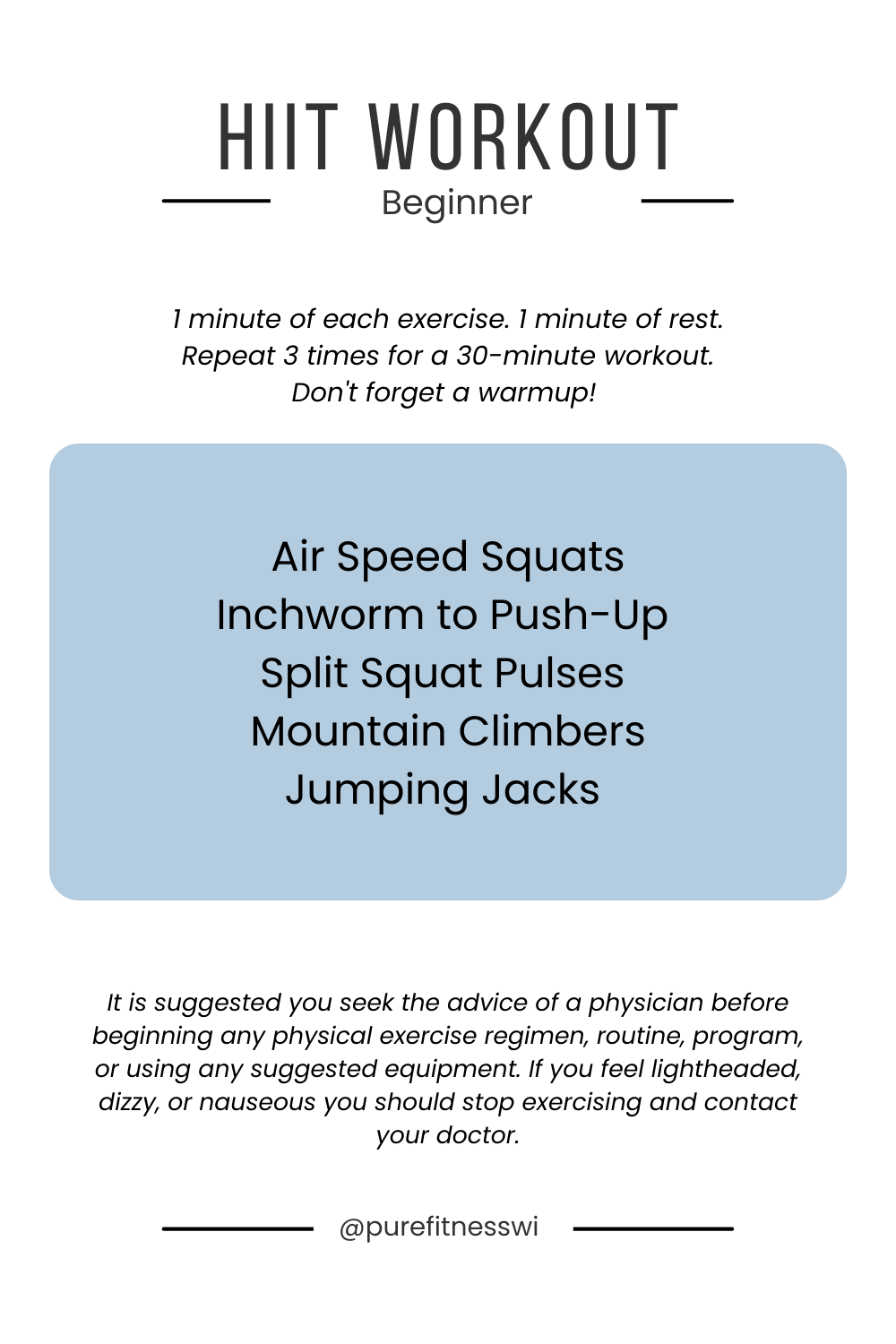
Below are two HIIT workouts that you can do from your living room. No equipment required! I made one that is for beginners and one that is more advanced! Be sure to push yourself, but be smart and safe, especially when working with heart rate training 😊.

EQUIPMENT

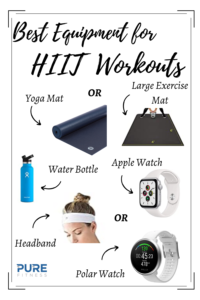
You don’t need much at home for a HIIT workout, but here are my essentials. I’ve included a yoga mat or a large exercise mat that is 4 by 6 feet. Great for if you are doing a lot of at-home workouts!

I also included my favorite water bottle for on-the-go. The Hydroflask water bottle is great because it keeps water cold and has two different caps for if you need it closed or easy access. I have included here the one with a sport cap. Great for grabbing a quick drink during your rest interval!

My favorite lululemon headband is also linked. I have struggled with find the right non-slip headband. This one has stuck with me through playing college volleyball and has stayed on during an entire match of me diving and sweating! It is the perfect non-slip headband for not letting sweat drip into your eyes!

Last I included different heart rate trackers. I have the apple watch which I absolutely love. I have had my apple watch series 2 for about 3 years now. It has been awesome for keeping track of my everyday movements and exercises. It even has an exercise mode for HIIT workouts. The other two are ones owned by my family and friends that they have also enjoyed. They both have great reviews from my in-person experience and in the their comments.

These are affiliate links. While there is no cost to you when you order through them, I do make a commission. Your support, by ordering through them, is greatly appreciated!

 
equipment for a HIIT workout

YOGA MATLARGE EXERCISE MATWATER BOTTLEHEADBANDAPPLE WATCHFIT BITPOLAR WATCH

KEY POINT!

The important thing to recognize about HIIT Training is that it is not an everyday workout and the rest between is a key part of it! You may feel like you are getting a great sweat and workout in, but you are only training in the aerobic state. Strength and power should also be key elements of your training regimen. If HIIT is a part of your program, try to leave two days between HIIT workouts to ensure full recovery.

HIIT can be a great training tool in getting to where you want to go with your endurance goals. If you are like me and running a couple miles a day is not your cup of tea, HIIT is a great alternative for you to find your limits without the time consumption!

And if you enjoy this fitness trend breakdown you should check out the articles on circuit training and Tabata workouts.

How Personal Trainers Can Attract Clients Consistently  

How Personal Trainers Can Attract Clients Consistently  

Building a thriving personal training business is no small feat, and for many trainers, the fear of not attracting enough clients is all too real. Consistently bringing in new clients while keeping current ones loyal is the key to growing your fitness business and...

read more
How to Maintain Golf Fitness During the Off-Season

How to Maintain Golf Fitness During the Off-Season

The off-season is a crucial time for golfers to focus on maintaining and even improving their fitness levels. Staying in shape during this period not only helps prevent injury when the season resumes but also gives you a competitive edge. We are going to walk through...

read more
fitness articles
lifestyle articles
nutrition articles
golf articles

SUBSCRIBE

Click to sign-up for weekly information and offers.

DISCLOSURE

We are a participant in the Amazon Services LLC Associates Program, an affiliate advertising program designed to provide a means for us to earn fees by linking to Amazon.com and affiliated sites.