12 Exercises for a Total Body At Home Workout

12 Exercises for a Total Body At Home Workout

One of the number one excuses that I (and many others) have used for not being able to get a workout in is saying, “There just is not enough time to get to the gym”. Yes, even though I work at a gym, I can find it difficult to stay that extra hour when things at home need my attention. A lot of us are faced with the same dilemma that has existed for a long time: busy schedules that don’t leave any time to get in a workout. Even if that is not the case, gyms are tough to get into and feel comfortable. An at-home workout theoretically sounds great, but buying equipment is expensive and what would you even do?

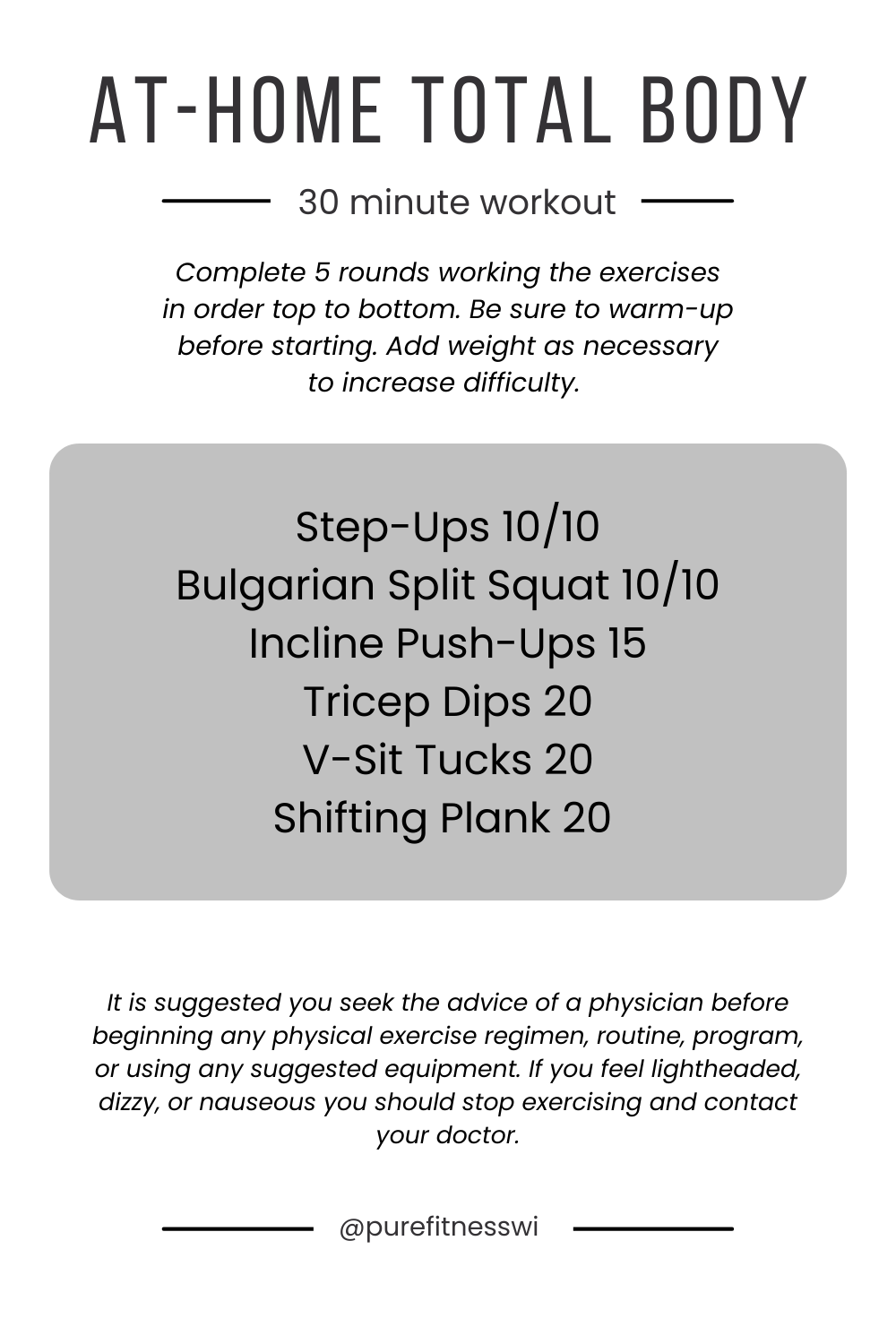
This post will take you through 12 exercises broken up into lower body, upper body and core. This will not be an everyday workout, but can maybe this will be the kick start you need to ease back into the workout routine!

LEG EXERCISES FOR AT HOME WORKOUT

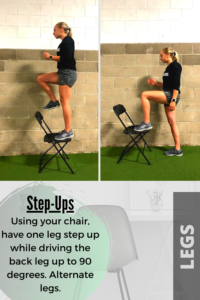
Step-Ups

  • Although we always talk about loading our posterior leg muscles, we can’t forget about those quads! Step-ups are a great exercise to not only burn out those quads, but also add a bit of heart rate. Simple and effective!

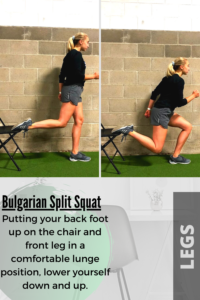
Bulgarian Split Squat

  • One of the toughest leg exercises to me personally! This exercise forces you to incorporate every lower body muscle you have to help you out of the bottom of the split squat position. Having your foot elevated on your chair just adds to the difficulty.

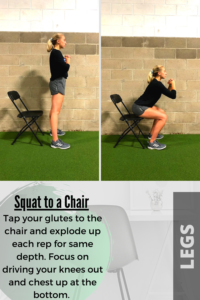
Squat to a Chair

  • I love this exercise because it forces you to hit the same depth every time. By making sure you tap your glutes to the chair and burst back up can add some great work in for those quads and glutes. For an added challenge, you can do an eccentric 5 count down to the chair to work your muscle differently or add some resistance.

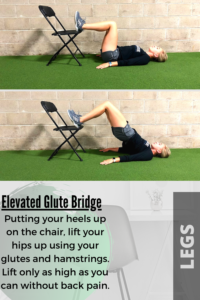
Elevated Glute Bridge

  • The glute bridge is one of our favorite exercises in the gym to encourage glute engagement and work our posterior leg muscles. By adding the elevation, it increases the difficulty of the exercise. For an even greater difficulty you can add a band above the knees or go single leg!

ARM EXERCISES FOR AT HOME WORKOUT

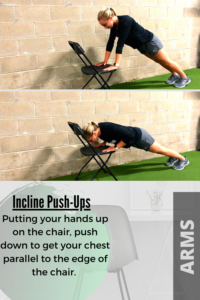
Incline Push-Ups

  • Push-ups can be a difficult exercise from the ground for most, due to a large load on your biceps and anterior shoulder. By using your chair to elevate your hands it can make it easier to do more reps that you thought possible! Or, say push-up are too easy for you? Then try putting your feet on the chair and doing decline push-ups to have gravity working against you!

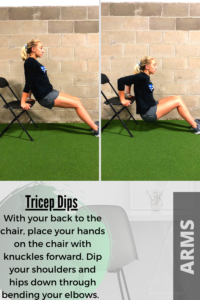
Tricep Dips

  • To work those triceps a bit, this is a great exercise to utilize that chair to target this muscle group! The further out you have those legs, the more difficult it is going to be. This will burn out those triceps pretty quick, however!

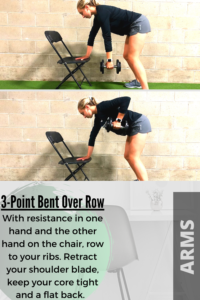
3-Point Bent Over Row

  • Using the chair to have one hand on and using a resistance to row to your chest in the other this is a great posterior shoulder exercise! If you do not have any weights, try using a gallon of milk or a paint can. During this one, be sure to focus on shoulder retraction.

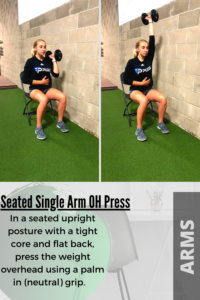
Seated Single Arm Overhead Press

  • One of the best parts of the workout, sitting down! This one is great for isolating each shoulder as it works to press the resistance of your choice overhead. Try facing your palm in different directions (forward, neutral, toward you) to give your shoulder muscles different work!

CORE EXERCISES FOR AT HOME WORKOUT

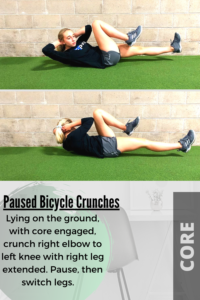
Paused Bicycle Crunches

  • All of the core can be done on the floor, but I suppose this one could be done on the couch too! Similar to a normal bicycle crunch, this exercise can encourage great core engagement. By pausing as your leg is extended, you force yourself to slow down and feel that good core burn!

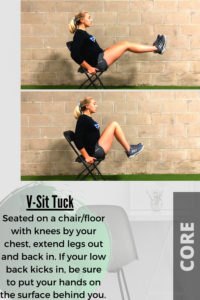
V-Sit Tuck

  • This one can be done right on the chair! By sitting in that V position and tucking your legs in and out, you can create some great concentric work for your abdominals. For an added challenge, extend your legs from side to side! Be sure to stop the exercise if you experience any low back pain.

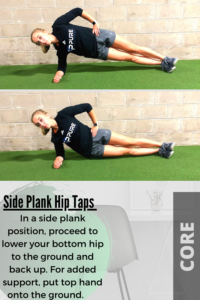
Side Plank Hip Taps

  • For this core exercise, you will need to head to the floor. As you hold a plank position, tap your hip toward the ground in order to get some great oblique work. Doing so while holding the plank works your abdominals isometrically as well!

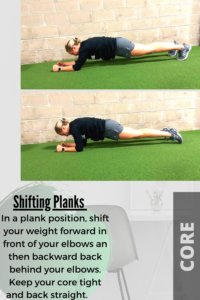
Shifting Plank

  • Similar to the previous exercise, you will be in a plank position. By shifting your weight in front of your shoulders and then behind it creates a more difficult version of the regular plank! The slower and steadier you control your body back and forth, the more intense the burn.


at home workout

Gnocchi and Sausage with Dijon Mustard Recipe

Gnocchi and Sausage with Dijon Mustard Recipe

This recipe was a surprise hit and too good not to share! I think it is a great winter or fall recipe - warm, hearty and packed with flavor. Oh and this dressing/sauce goes great on a lot of dishes. Without further-a-do here is my gnocchi and sausage with dijon...
read more
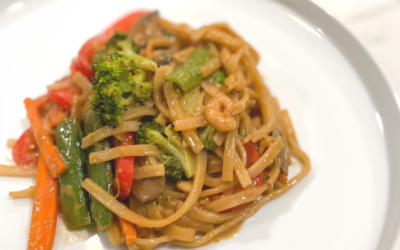
Easy Shrimp Pad Thai Recipe

Easy Shrimp Pad Thai Recipe

I am definitely a salty savory kind of lady and so is my family. Which is why this recipe is in regular rotation in my house. The ingredients can be somewhat flexible, it doesn't take long and the leftovers are delicious. Introducing a truly easy shrimp pad Thai...

read more
Lazy Chicken Noodle Soup Recipe

Lazy Chicken Noodle Soup Recipe

I love making a big batch of chicken noodle soup because it is comforting, warming and filling. On the flip side I am often looking for fast recipes that I can work into my weekly rotation. That's why I came up with this fast and one pot Lazy Chicken Noodle Soup...

read more
fitness articles
lifestyle articles
nutrition articles
golf articles
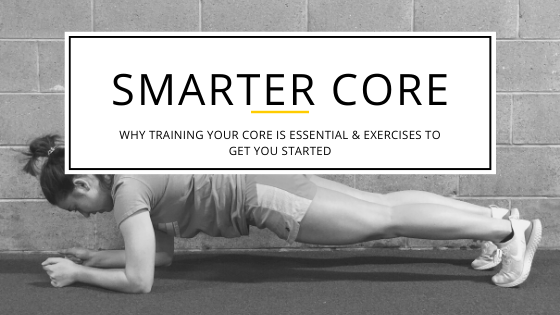
WHY TRAINING YOUR CORE IS ESSENTIAL AND EXERCISES TO GET YOU STARTED

WHY TRAINING YOUR CORE IS ESSENTIAL AND EXERCISES TO GET YOU STARTED

Training your core is so much more than sit-ups and crunches. The approach you take to training your core is like laying the foundation for a house to built upon. Do it poorly and the house won’t last. BUT if you prioritize the foundation and put time, energy and effort into it the house will last. Keep reading and learn more about why your core is the foundation and how you should be training.

CHASING THE SIX PACK 

Many people are on the search for their “perfect summer body”. This often starts with the illusive six-pack that many are chasing. An accessory for their favorite summer outfit. But is the 5-minute ab workout the right fit?

I think it is important to state that I have been in that exact scenario in years past. Googling workouts to find a quick fix on how to get there in 2 weeks. Contrary to popular belief, this cannot be attained. Even the 50 crunches a day and the 5- minute ab workout won’t do it in 2 weeks. I want to offer you a new perspective on core. I want to show you what building a strong core means and does for you.

THE TRUTH ABOUT CORE

Yes, doing ab exercises can build strength in your abdominal muscles just as doing bicep curls strengthens your biceps. However, looking at this as the key to your swimsuit body is only a snapshot of the picture. The hard truth is that our core is essential to our general existence. We wouldn’t be able to stand up and walk around without core muscles.

Your core is more than just your abdominal muscles. It includes not only your “six pack” (rectus abdominus), but all of the muscles that are in the trunk of your body like your back, hips, and glutes just to name a few. Training the core as a whole can bring many benefits such as:

  • Reduced back pain due to proper activation of abdominal muscles
  • Increase in stability and balance through strong core
  • Teaching the body to engage the core in everyday activities (yard work, lifting groceries, etc.) 

If your swimsuit body needs a six pack to go along with it, you will need to hit the kitchen. The gym is not likely the only “missing link”. But remember you do have one, because our core is our foundation. The stronger it is the healthier you are. Regardless of whether you can see it or not.

WHERE TO START

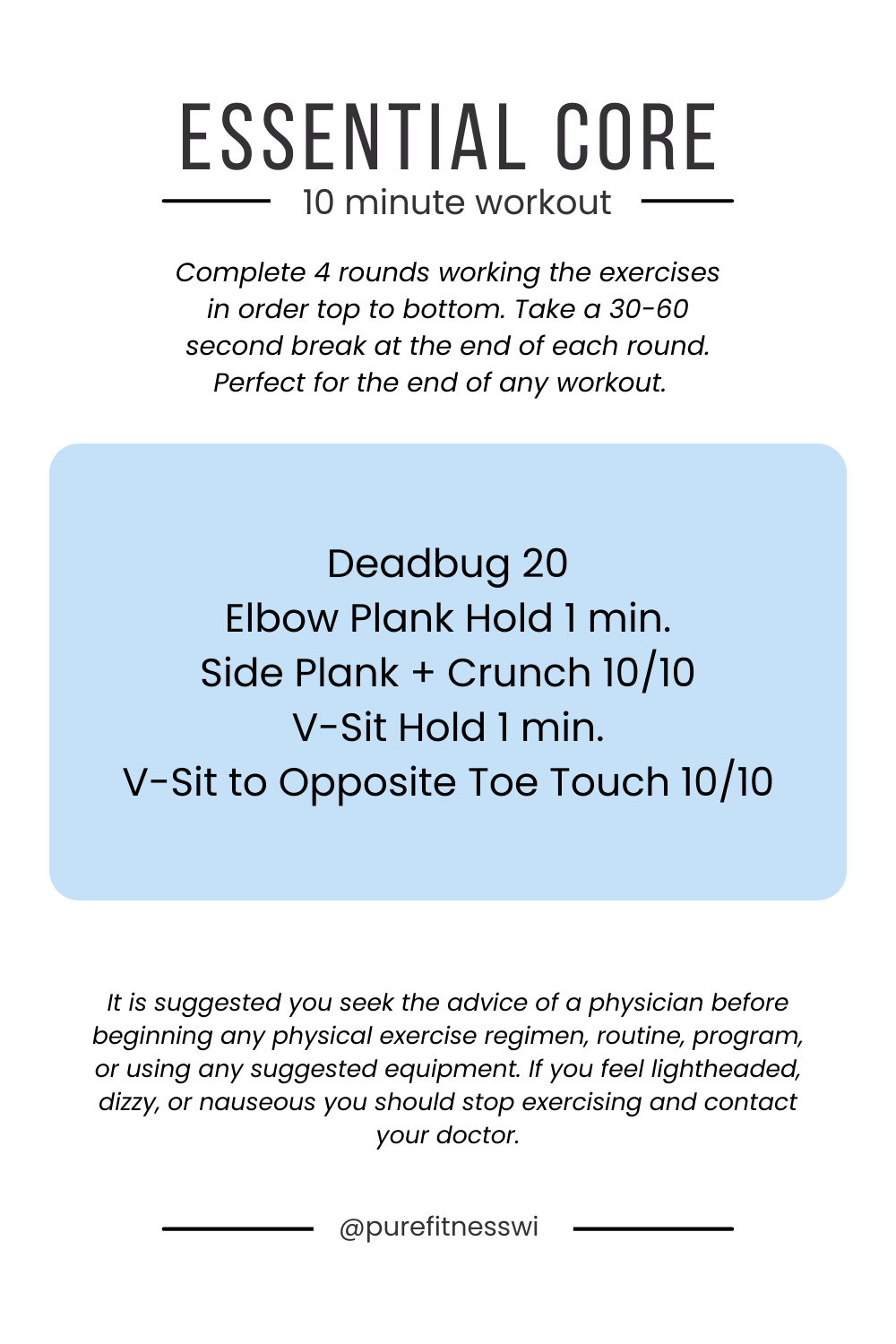
Here are some of the favorite and effective core exercises we love at Pure Fitness. Bonus is that you can do them at home. Side note, there are a significant number of variations for each of the exercises below. These are a good starting point to train your core in a variety of planes of movement an under different loads.

Dead Bugs For Training Your Core

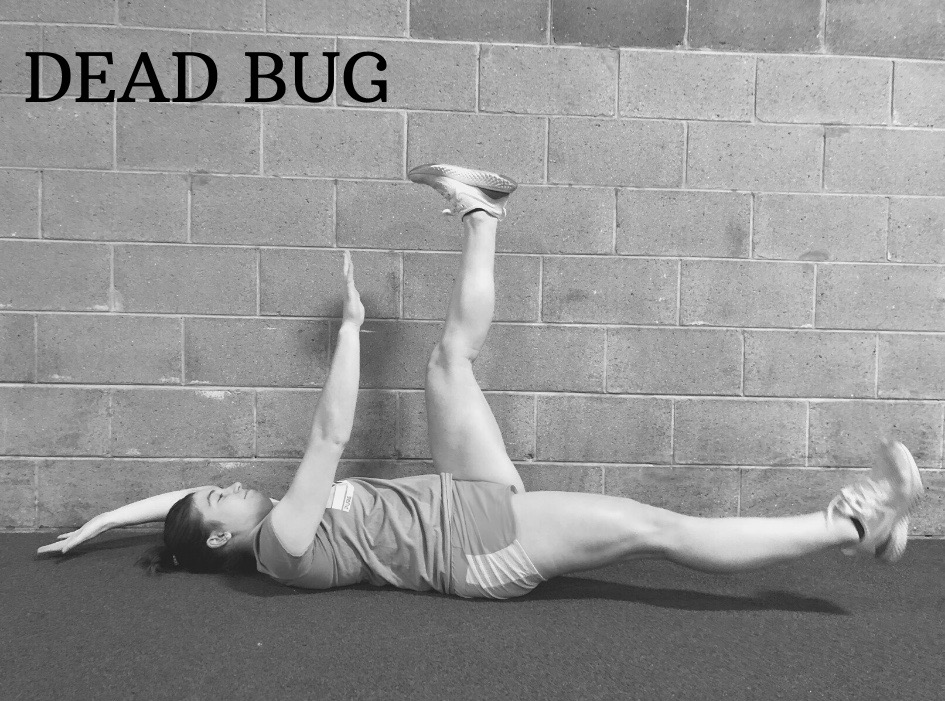
This is definitely my go-to exercise for helping people learn to engage their core. This position allows us to teach people how to engage their core and stabilize their low back/pelvis, preventing extension and flexion of the spine, while limbs are moving. 

Focus on keeping your back motionless and driven into the ground as you move arms and legs. Any arching of the back away from the ground should be considered as a failed rep. Try to reset your core, brace into the ground and begin moving again. Remember that you are in control of the range of motion. You can always shorten or modify range of motion to ensure quality of reps. Then over time you can increase the range of motion as you become stronger.

For an easier modification bend your knees and for a harder modification hold a light weight in each of your hands.

We consider this a gold standard of core exercise!

Elbow Plank For Training Your Core

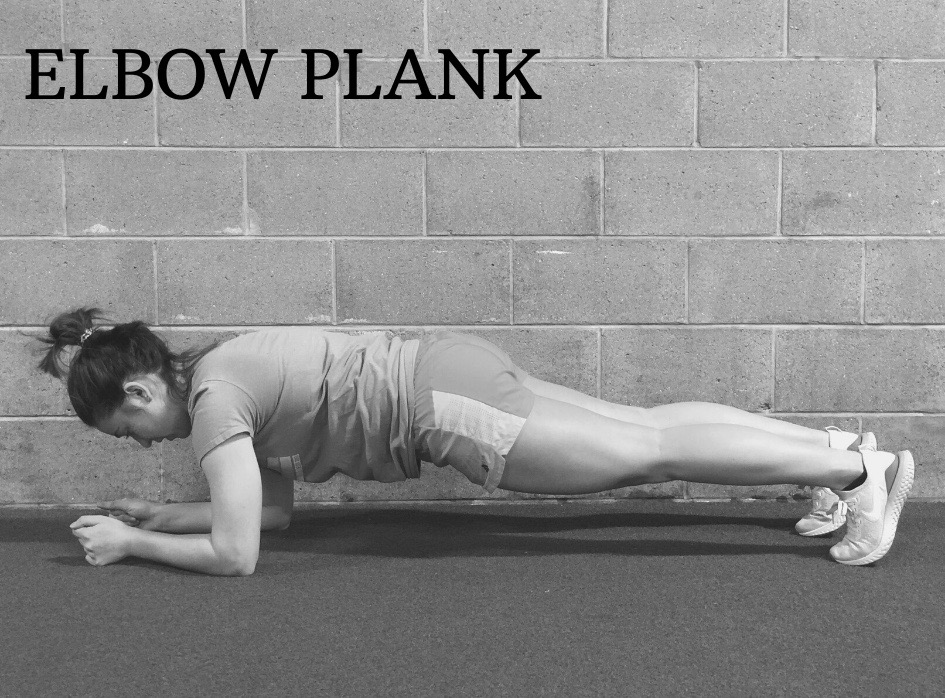
A simple, but effective isometric exercise that not only engages your abdominal muscles, but your shoulders as well. I personally love planks to work on stability. It is easy to feel/see when you are working through your back as your hips sink and abdominals extend.

Focus on keeping your hips tucked up so that your low back does not arch. With tucked hips, you will notice that your low abdominals really turn on and help stabilize your body.

I encourage you to think of your core as including your glutes and shoulders on this exercise. Pay attention to both and everything in the middle to get the most out of your elbow plank.

Side Plank + Crunch For Training Your Core

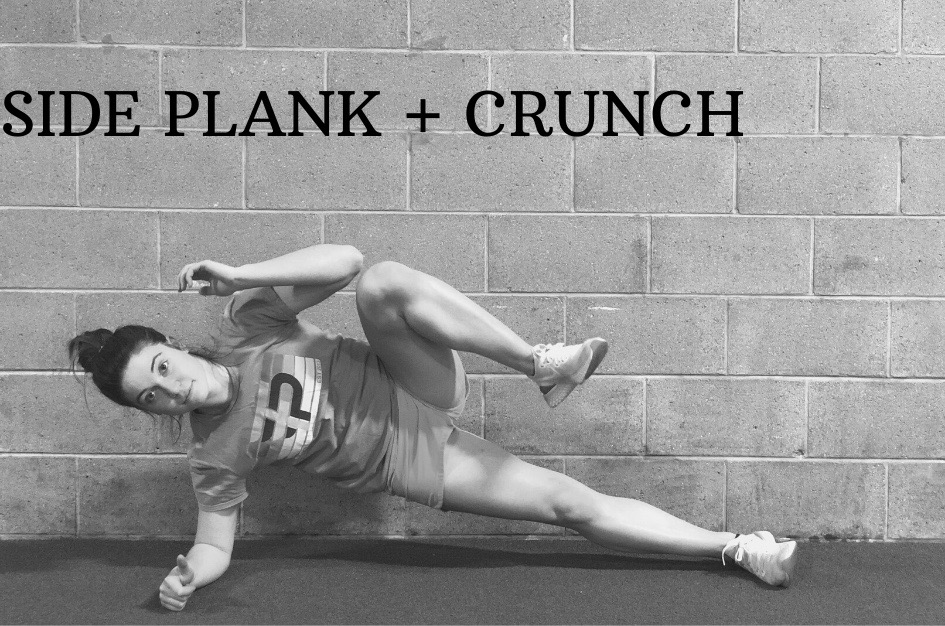
I always love using this combination exercise that can work in two actions, isometric and concentric. A great exercise for working your obliques and uses your bottom glute to support as well! Remember our core is hips to shoulders, training them synergistically is important!

If you struggle with holding a side plank we suggest you focus on properly holding a side plank before adding the crunch. You can also modify this exercise so the bottom knee is bent and resting on the ground. This will make the side plank portion easier and hopefully allow you to incorporate the crunch successful. BUT don’t give up on side planks. You’ll still need to practice them to build up your strength.

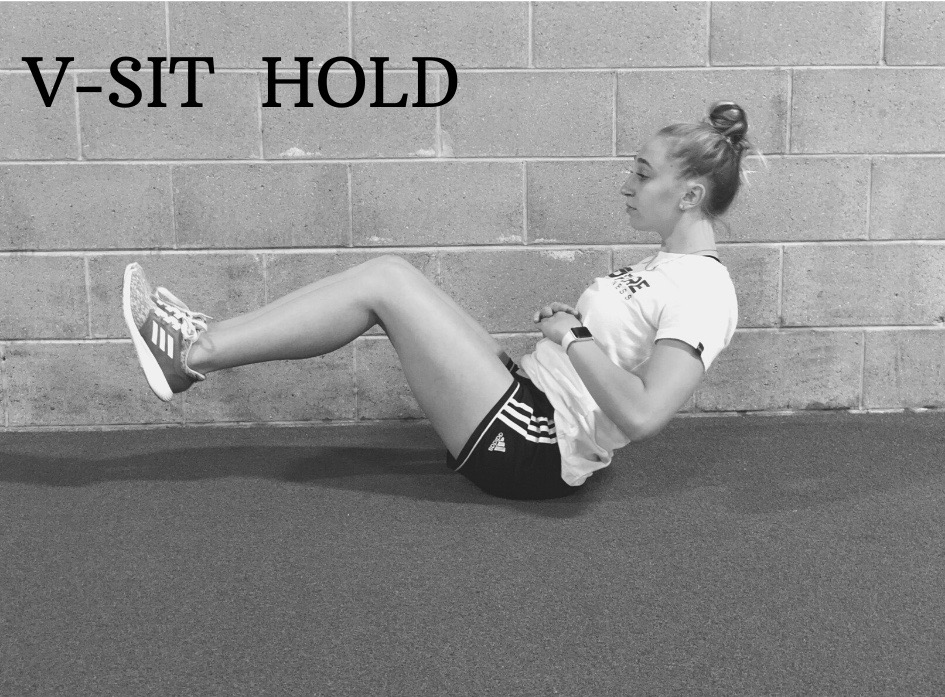
V-Sit Hold For Training Your Core

A different way to work isometrically by really isolating your abdominal muscles. This exercise will show you if you are working through your core or your back. Many people do v-sits with constant back pain. If you are one of those people. Stop.

The best way to avoid back pain is to focus on a crunch in the abdominals. Most of the time we think of a v-sit as having a flat back and very up right posture.

For a modification you can try placing your hands on the ground next to or just behind your hips. This will allow you to de-load the exercise by supporting some of your bodyweight.

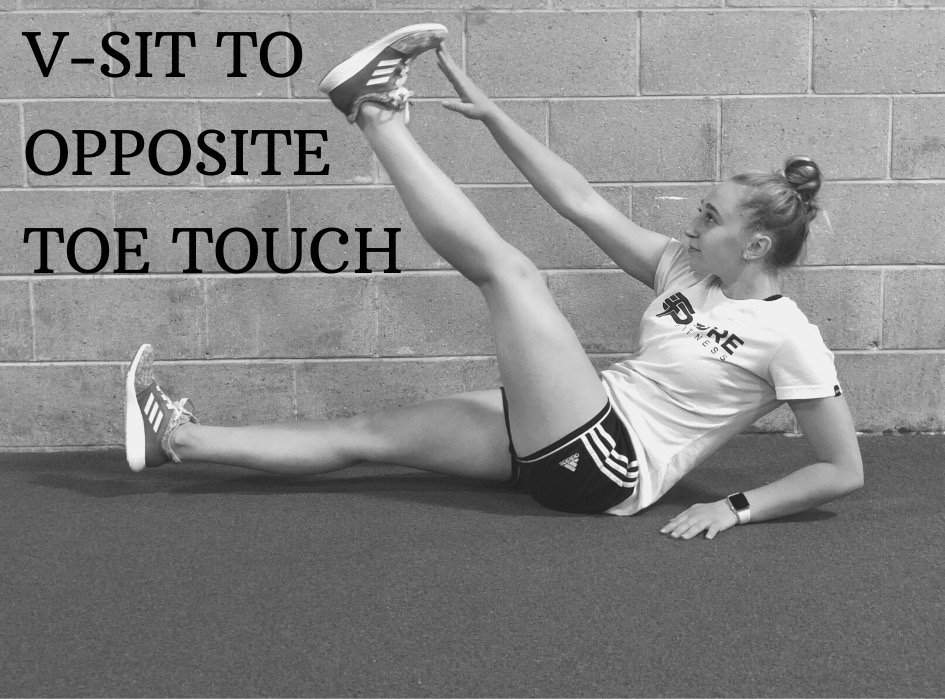
V-Sit To Opposite Toe Touch For Training Your Core

This active variation of a crunch can really create a great burn for your abdominal muscles. For beginners, keeping your back flat to the ground can help stimulate the correct use of core engagement. We find the key is to tighten your core before lifting your arm or leg.

Modifications for this exercise can be to leave your back flat on the floor through the entire movement. Focusing on bracing into the ground before you move either your arm or your leg.

Additionally, you can bend your knee moving in a tuck and extend movement pattern as opposed to the straight leg swing.

MY THOUGHTS ON CORE

Just like in life there are no easy short cuts. If it sounds too good to be true (5-minute six pack) it probably is! Spot reduction is not something that has been proven by science to work. And I have yet to see it work in the gym.

Keep in mind that every single person is different. We all have unique metabolisms and body types. Just as I stated in my post about nutrition, it is about creating healthy habits that you can sustain for life. I suggest focusing on building a strong core for a better life, not chasing a six pack that somebody else has. I believe in building a strong body, not an Instagram-able body! 

Gnocchi and Sausage with Dijon Mustard Recipe

Gnocchi and Sausage with Dijon Mustard Recipe

This recipe was a surprise hit and too good not to share! I think it is a great winter or fall recipe - warm, hearty and packed with flavor. Oh and this dressing/sauce goes great on a lot of dishes. Without further-a-do here is my gnocchi and sausage with dijon...

read more
Easy Shrimp Pad Thai Recipe

Easy Shrimp Pad Thai Recipe

I am definitely a salty savory kind of lady and so is my family. Which is why this recipe is in regular rotation in my house. The ingredients can be somewhat flexible, it doesn't take long and the leftovers are delicious. Introducing a truly easy shrimp pad Thai...

read more
Lazy Chicken Noodle Soup Recipe

Lazy Chicken Noodle Soup Recipe

I love making a big batch of chicken noodle soup because it is comforting, warming and filling. On the flip side I am often looking for fast recipes that I can work into my weekly rotation. That's why I came up with this fast and one pot Lazy Chicken Noodle Soup...
read more
fitness articles
lifestyle articles
nutrition articles
golf articles

SUBSCRIBE

Click to sign-up for weekly information and offers.

DISCLOSURE

We are a participant in the Amazon Services LLC Associates Program, an affiliate advertising program designed to provide a means for us to earn fees by linking to Amazon.com and affiliated sites.

How To Warm-Up and Cool Down when Working Out

How To Warm-Up and Cool Down when Working Out

Why is warming up important?

I don’t think that anyone is necessarily surprised by being told to warm-up. However, do you actually know why it is important? I was raised in sports, which for me means I was raised warming-up. And not warming-up seems like I’m breaking the rules. So I have always warmed-up. It wasn’t until I studied exercise science that I actually learned the physiological reasoning behind the “warm-up”.

The most basic reason to warm-up is prepare for more intense movement by warming the body. But to add more detail: through warming-up we are specifically trying to warm the muscle tissue. This is important because that muscle tissue is about to do a lot of work. Avoiding going from cold and stationary to all out effort give our muscles and body the time and process needed to reach their optimal performance point. A huge bonus is that a proper warm-up will decrease the risk of injury. Most data I have seen shows it takes 8-12 minutes to effectively warm-up. Make it your goal to warm-up for 8-12 minutes. 

What should you warm-up?

A focused warm-up should prioritize the muscles and movements you will be performing in your main workout. For example, overhead athletes, like baseball and volleyball players, should make a dedicated effort to warm-up their shoulders. However, that can be much less important to a marathon runner. BUT, all of those athletes would rely on their foundational muscles like glutes and abdominals to perform at a high level. Below is a short video explaining our three favorite warm-up exercises and how to use them. For general population we have targeted the pillar or shoulders to hips. 

These are affiliate links. While there is no cost to you when you order through them, I do make a commission. Your support, by ordering through them, is greatly appreciated!

We use: 

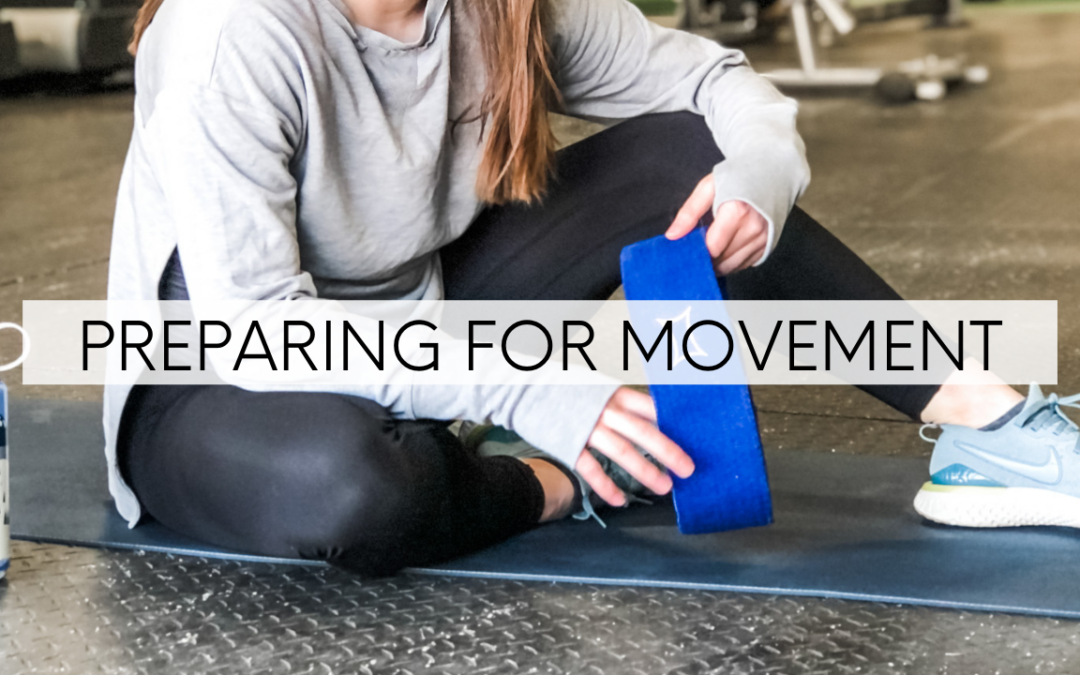
  1. Banded walks for glute activation and hip stability. Purchase a hip circle here.
  2. Dead bugs for core activation and stability.
  3. Swimmers or reverse fly for posterior shoulder and back activation.

WHY IS STRETCHING FOR A COOL DOWN IMPORTANT?

Stretching is one of the most impactful means for improving range of motion (ROM). And ROM is at the very foundation of our training philosophy. Why do we care about ROM so much? Three simple reasons. One, range of motion helps to maintain a properly functioning kinematic sequence (muscle firing pattern). Two, it is a key component to injury prevention. And three, you will never reach your full potential without maximizing your range of motion. 

Outside of range of motion stretching can help decrease the impacts of a hard workout like soreness and fatigue. Something we all want at the end of the day. It will help to maintain a muscular balance and prevent pain and discomfort results from tight muscles. And it feels so dang good!

WHAT SHOULD YOU STRETCH?

Everyone should stretch. How much and which muscles is going to vary slightly person-to-person. Which is why we have our basic 5 stretches. They address the muscles, we see, that are most commonly related to ROM issues which can lead to chronic pain or injury.

The stretches are focused on large muscle groups to help manage the impact of exercise and muscle soreness. They are also common muscles impacted by our daily lifestyle that includes sitting, driving, computer work; which can all be translated to an anterior load. These stretches WILL 100% help improve your posture and overall feeling of well being no matter how intense your workouts are. 

  • Straight Ahead Hamstring Stretch
  • Sideways Hamstring Stretch
  • Hip Flexor & Quad Stretch
  • Glute Stretch
  • Chest Stretch

HOW DO YOU STRETCH?

Take look at our short video to learn more about how to correctly perform each stretch. We suggest a 30 second interval for the stretch to maximize your results. FYI – holding for less than 20 seconds has been shown to NOT have lasting results in muscle lengthening. Here are some key points to follow while stretching:

  • Warm Body – we are talking about using these stretches as a cool down, but it needs to be said that when you are doing static stretching you should be warmed up. Avoid holding stretches without intentionally warming your muscles. It can be as simple as walking for 5-10 minutes.
  • Duration – the science recommends holding a stretch for 30 seconds. If you lack flexibility try holding a stretching for 30 seconds a few times by alternating sides. For example, left leg 30 seconds, right leg 30 seconds. Repeat a few times.
  • Posture – focus on keeping an upright chest posture, or a flat back. The alignment of your joints in that position will provide you with the maximal lengthening for the muscles we are focusing on.
  • Zero Pain – there should never be any pain while stretching, The presence of pain is likely to yield the opposite result – muscle shortening. Pain is a signal to our muscular system to contract (shorten) to protect itself. Stretching (lengthening) pain free is very important.


Gnocchi and Sausage with Dijon Mustard Recipe

Gnocchi and Sausage with Dijon Mustard Recipe

This recipe was a surprise hit and too good not to share! I think it is a great winter or fall recipe - warm, hearty and packed with flavor. Oh and this dressing/sauce goes great on a lot of dishes. Without further-a-do here is my gnocchi and sausage with dijon...

read more
Easy Shrimp Pad Thai Recipe

Easy Shrimp Pad Thai Recipe

I am definitely a salty savory kind of lady and so is my family. Which is why this recipe is in regular rotation in my house. The ingredients can be somewhat flexible, it doesn't take long and the leftovers are delicious. Introducing a truly easy shrimp pad Thai...

read more
Lazy Chicken Noodle Soup Recipe

Lazy Chicken Noodle Soup Recipe

I love making a big batch of chicken noodle soup because it is comforting, warming and filling. On the flip side I am often looking for fast recipes that I can work into my weekly rotation. That's why I came up with this fast and one pot Lazy Chicken Noodle Soup...
read more
fitness articles
lifestyle articles
nutrition articles
golf articles

SUBSCRIBE

Click to sign-up for weekly information and offers.

DISCLOSURE

We are a participant in the Amazon Services LLC Associates Program, an affiliate advertising program designed to provide a means for us to earn fees by linking to Amazon.com and affiliated sites.