IronMan Injury Prevention

IronMan Injury Prevention

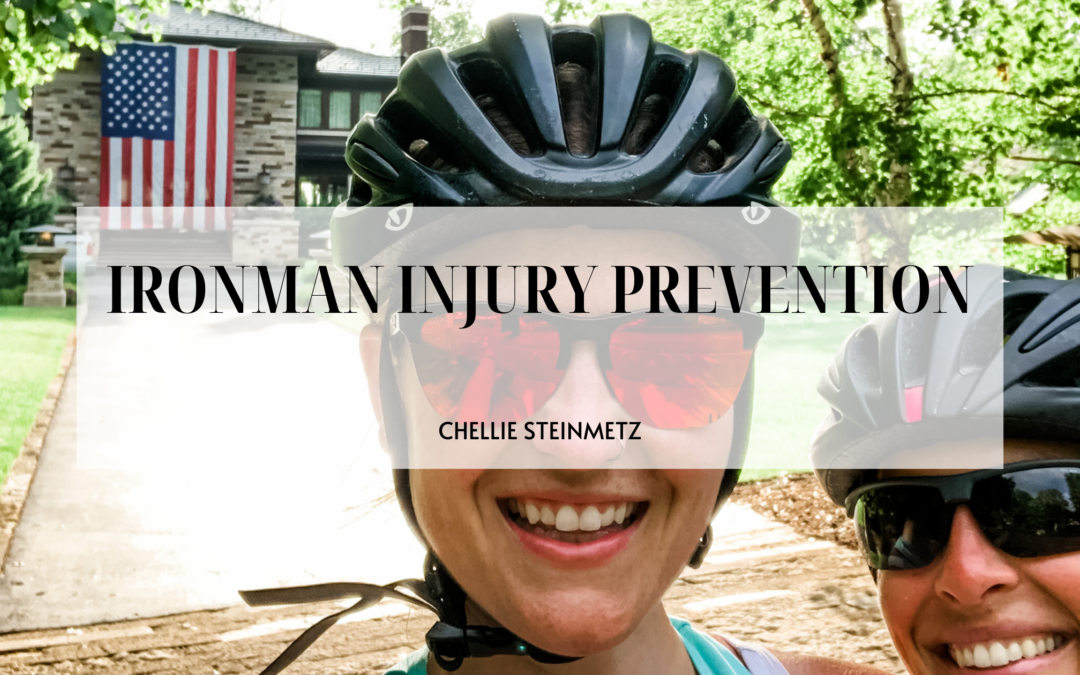
Today guys, we were talking IronMan injury prevention. I would say that one of the most asked questions I get while training for an IronMan is..

“How do you take care of yourself?”

Or perhaps put in a less eloquent way…

“Doesn’t that just trash your body?”

Usually when someone asks me that question I jump into a long-winded explanation. I blab on about how it could and to some extent will take a toll on your body. But with proper training and recovery you should be just fine.

And as a rule, in general I’m trying to no longer be long-winded. If there’s one thing that Mike and his type eight personality has taught me, it is that being long-winded is not always appreciated. Check out more about the Enneagram personalities.

What I want to provide you with today is a synopsis of how to prevent injury while training for an IronMan. For this conversation I’ve brought along with me my training partner friend and physical therapist Kaite Van Laanen.

She is going to give us the expert medical side of injury prevention from a physical therapist point of view. And I’m going give you my perspective as a trainer.

Whether you’ve always wondered how it’s possible for the human body to perform an activity like an IronMan or if you’re training for one yourself what you’re about to read will give you a great understanding of how to successfully train for an IronMan and remain healthy.

Now let me take a step in another direction.

HOW YOUR GEAR CAN PROVIDE INJURY PREVENTION WHILE TRAINING FOR AN IRONMAN

My first endurance event was with MS Run the US in 2015. And boy did I have a huge learning curve. I had never ever ran a marathon before and I was setting out to run six marathons in six days for the charity.

By day three I learned that I should have checked by ego at the door. And that your running shoes are essential to success. I had brought with me one single pair of running shoes.

There should be dramatic background music playing. Like right when a detective figures out who the murderer is. Because the one pair of running shoes was murder on my feet and ankles. Take a look at the picture of my ankle at the end.

I was running in the same pair of shoes day after day for six days straight. If you haven’t done the math yet that is over 150 miles. And I had been training in these shoes prior to the event!

If this doesn’t seem like a big deal, let me tell you two things. One, the average mileage of a shoe is 300-500 miles. Two, shoes need time to recover. The cushioning/support gets worn down through the pounding of running. 48 hours is recommended between wears.

All of this is to say, if you are doing an endurance event find the best gear for you. I swear it will make a difference.

Please don’t get that confused with “you need all the bells and whistles”.

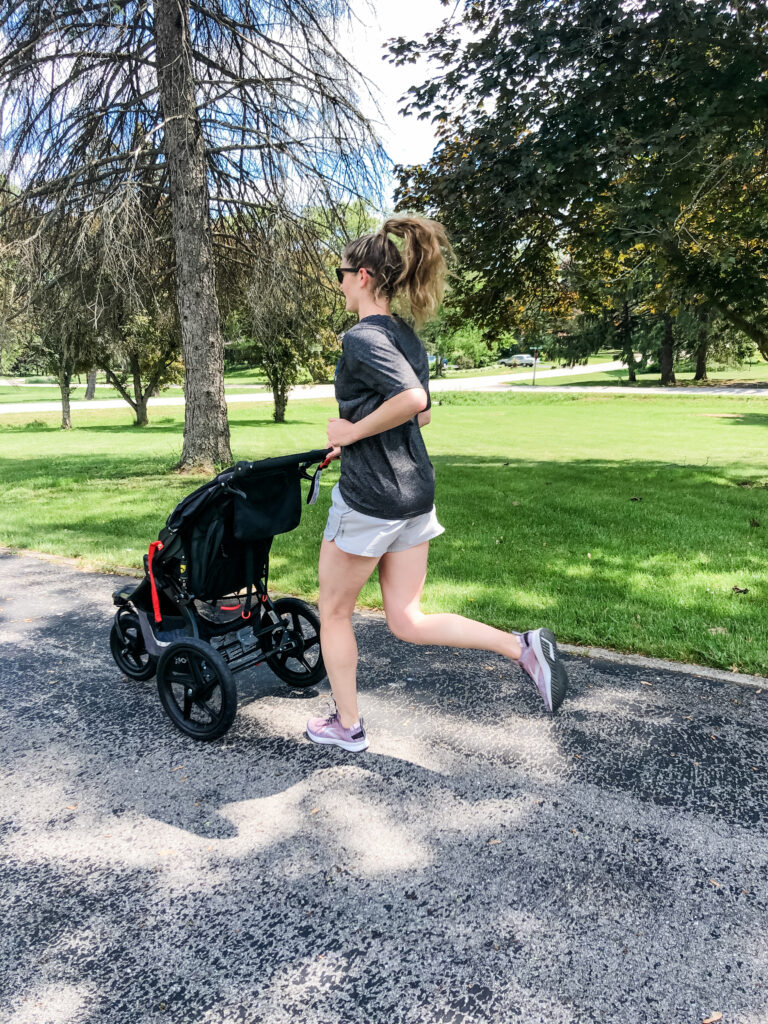
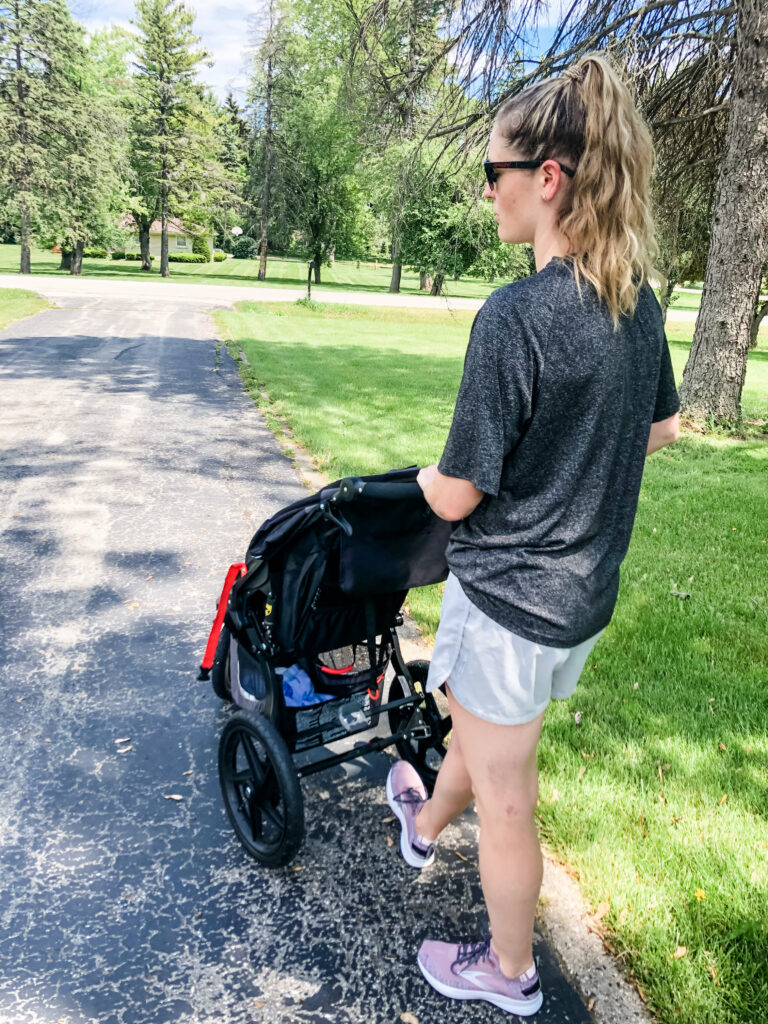
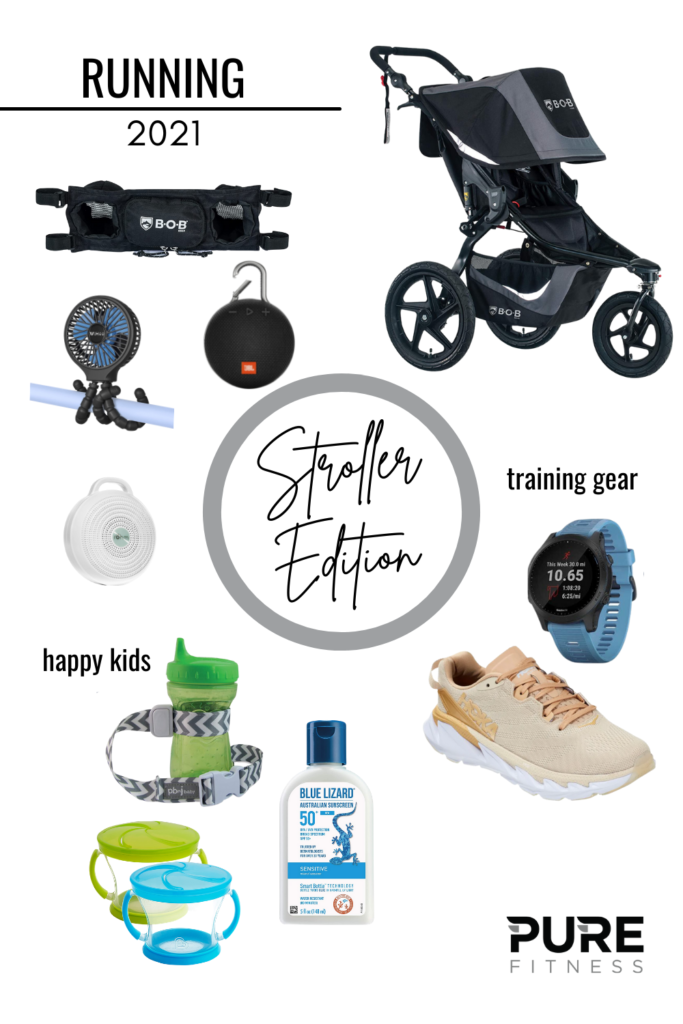
What you need is equipment that is fit to your body, that will allow you to perform your best during training and racing. If you are a mom, check out my stroller running essentials.

Now let’s talk about how to train to prevent an injury.

INJURY PREVENTION WHILE TRAINING FOR AN IRONMAN FROM A PHYSICAL THERAPIST

If you have been reading my other articles, Training for An IronMan As a New Mom with less time in 2021 and How To Use Interval Training For A Successful IronMan Run,  then you know I am giving a HUGE amount of focus on running for my upcoming IronMan race. And training for any running endurance event comes with unique challenges from an injury prevention perspective.

As a personal trainer I most commonly I see chronic knee pain, plantar fasciitis and shin splint style pain in my clients. Frequently these pains are associated to bad footwear, over training/ bad programming or poor recovery.

If I can’t help a client with adjusting their programming, targeting their recovery or changing their footwear I always refer to a physical therapist. As my friend Kaite said to me, “nothing will compare to the hands of a good PT”.

COMMON RUNNING INJURIES SEEN IN ENDURANCE ATHLETES

  • Posterior tibial tendonitis
  • Plantar fasciitis
  • Hamstring strain/pain
  • Piriformis pain
  • Chronic knee pain

The trick here is to prevent a running related injury before it starts. Kaite recommends a four tier approach.

4 STEPS TO PREVENT A RUNNING RELATED INJURY BEFORE IT STARTS

First, use a dynamic warm-up before starting any run. You want to simulate what you are going to do at a slower speed and intensity. The more specific you can be to the movements you are going to perform, the better the warm-up. And the intention is to increase blood flow to muscles and activate the supporting musculature to prevent pain and injury during a workout.

Second, stretch AFTER you run and make sure you are doing it correctly.

According to Kaite, a runner should address the following as part of cool down stretching.

  • Hip flexors/quads
  • Hamstrings
  • IT band
  • Piriformis
  • Calves

Third, consistently strength train, with a focus on balance, for the smaller supporting muscles of the lower extremities. And of course, don’t forget core strengthening.

I have more details on this below. Keep reading!

Fourth, use a PT to find areas of the body that have the potential to contribute to mechanical dysfunction and cause pain.

Kaite’s advice for IronMan athletes, “With this intensity and length of a training program, athletes are bound to have things pop up.  Deal with pain as soon as it arises. Don’t try to just train through it”.

She also encourages athletes to use a PT even before pain occurs to prevent injury. Having assessments on strength and flexibility to be proactive about your entire training program.

INJURY PREVENTION WHILE TRAINING FOR AN IRONMAN FROM A PERSONAL TRAINER

I have two words for you. Strength. Training.

For a while there was some debate on how strength training should fit into an endurance athlete’s program. The good news is that we know it is needed. But that doesn’t mean it is given the time it needs.

Strength training should be used throughout the entire training cycle. Deloading as you come near race day to hit your performance peak.

TOP AREAS TO STRENGTHEN FOR RUNNERS

A properly developed program should focus on both restoring balance from the volume of training (opposing muscles) and strengthening/building endurance in the necessary muscles.

I would argue that posterior chain is extraordinarily important for runners. I pay special attention to glutes, hamstrings and back/posterior shoulder muscles to improve muscular balance.

The initial focus is on full range of motion, followed by stability. Only then can we truly load an athlete for performance.

And you can never underestimate the necessity of core strengthening in your program. Your core is your foundation for movement. The better your foundation the better your movement will be. That be injury prevention, running faster, or simply feeling better.

Additionally, would encourage athletes to focus on training their lactate threshold for improving their overall performance. Read this blog for more information on how to train your lactate threshold for running.

The better periodized your program is, the better results you will get and you will be able to avoid training related injuries with ease.

MANAGING PAIN WHILE TRAINING FOR AN IRONMAN

If you are currently dealing with an injury or chronic pain/discomfort I am sure you feel torn on what to do. It is easy to get caught in limbo. Thinking, how can I race if I don’t train – and – how can I train if I am always in pain.

I can’t give you a clear answer. Simply because I don’t know you. What I can do is be the good angel sitting on your shoulder. Sometimes rest will save you time.

I often see athletes who could take 1-2 weeks of rest and recover without and impact to their end goal. However, they elect not to rest and carry a nagging injury with them to race day. That is the kiss of death.

I will leave you with this one last thought.

Your mind is your most powerful tool.

In training and in racing.

Before you show up on race day you have determined your fate to finish or to not. Your mind decided how disciplined you would be during training. And you have already decided to seek the best help possible to ensure your success.

Respect your mind and use its power.

I shared more about How To Have Discipline For An IronMan Race and Mental Challenges of Training for An IronMan As A Mom in these blogs. They are worth a read if you are struggling or wondering if you should take the leap and sign-up!

Cheers to IronMan training!

How to Build a Consistent Workout Routine in 30 Days

How to Build a Consistent Workout Routine in 30 Days

Establishing a consistent workout routine can feel overwhelming, especially if you’ve struggled with consistency in the past. Whether you’re a beginner or looking to get back on track, creating a routine that sticks is key to achieving your health and fitness goals....
read more
Minimalistic Home Gym Essentials: What You Really Need

Minimalistic Home Gym Essentials: What You Really Need

Minimalist me is a mix of a passion for organization, functional accessibility and efficiency. More is not always better in a gym and how you select, store and use your gym equipment is the key to having a minimalistic home gym. I have picked 7 minimalistic home gym...

read more
Discipline in Fitness: How to Achieve Your Goals

Discipline in Fitness: How to Achieve Your Goals

After many years of working out and hearing the same question, “how do you motivate yourself to workout everyday?” I have a not-so-secret secret to share… It isn't about motivation. It is about discipline.  While motivation might get you started on your fitness...

read more

SUBSCRIBE

Click to sign-up for weekly information and offers.

DISCLOSURE

We are a participant in the Amazon Services LLC Associates Program, an affiliate advertising program designed to provide a means for us to earn fees by linking to Amazon.com and affiliated sites.

Stroller Running Must Haves for New Moms

Stroller Running Must Haves for New Moms

It has been a few months of running as a mom and I think (and I stress the word think) I have it together. Let’s talk about stroller must haves for new moms.

Figuring out how to run as a new mom was step one. Wrapping my head around running with a stroller, maybe a dog and the physical demands.

There is one way to appreciate running alone. Run with a stroller all the time. You will forever be thankful for the time to run alone.

Then there was the matter of how to execute it. I had to consider when I ate last, when my son slept last and slept next, the weather, do I need toys, what about a snack. Will he be too hot? Could he get sunburn? Man, it felt like more work to go than to sit at home.

But isn’t that always the case.

Once I got over myself. Got out of my own way. I figured this mom running game out. Here are my stroller must haves for new moms.

STROLLER | HANDLEBAR CONSOLE | FAN | BLUETOOTH SPEAKER | SOUND MACHINE| CUP/TOY STRAP | SNACK CUP | SUNSCREEN | SHOE | WATCH

Investing in a quality stroller is a key to a favorable run. This stroller is 1000% worth it. I can’t imagine running with anything else.

I have included a few of my favorite accessories for the stroller too. I don’t necessarily run with all of this every time, but I use it all weekly. The strap is essential – it will save you from stopping to pick up a toy/cup every 5 feet. And the handlebar console is great for running/walking/events. So handy for you.

I also put in my two favorite training items. A good watch and incredible shoes.

And for those of you that are following along with my.IronMan journey I shared How To Use Interval Training For A Successful IronMan Run and the Mental Challenges of Training for An IronMan As a New Mom.

Cheers to a great run!

Chellie

How to Build a Consistent Workout Routine in 30 Days

How to Build a Consistent Workout Routine in 30 Days

Establishing a consistent workout routine can feel overwhelming, especially if you’ve struggled with consistency in the past. Whether you’re a beginner or looking to get back on track, creating a routine that sticks is key to achieving your health and fitness goals....

read more
Minimalistic Home Gym Essentials: What You Really Need

Minimalistic Home Gym Essentials: What You Really Need

Minimalist me is a mix of a passion for organization, functional accessibility and efficiency. More is not always better in a gym and how you select, store and use your gym equipment is the key to having a minimalistic home gym. I have picked 7 minimalistic home gym...

read more
Discipline in Fitness: How to Achieve Your Goals

Discipline in Fitness: How to Achieve Your Goals

After many years of working out and hearing the same question, “how do you motivate yourself to workout everyday?” I have a not-so-secret secret to share… It isn't about motivation. It is about discipline.  While motivation might get you started on your fitness...
read more
fitness articles
lifestyle articles
nutrition articles
golf articles

SUBSCRIBE

Click to sign-up for weekly information and offers.

DISCLOSURE

We are a participant in the Amazon Services LLC Associates Program, an affiliate advertising program designed to provide a means for us to earn fees by linking to Amazon.com and affiliated sites.

How to Use Interval Training for A Successful IronMan Run

How to Use Interval Training for A Successful IronMan Run

Let’s talk about running.

I have a tumultuous history with running. Maybe a better way to say it is that I have a love-hate relationship with running. So the fact that running is the last event in an IronMan is mind-bending for me.

It isn’t that I literally hate running, but that what I want and what I feel are totally different. I want to be a good runner – technique, abilities, attitude.

But what I feel like is a baby deer just learning to walk, mixed with the most negative person you have ever met. The self-talk in my head would make a psychologist blush.

For YEARS I tried to change all of this. I tried to give myself pep-talks and memorize mantras.  I gobbled up information everywhere I could on running technique and training programs.

My first IronMan training partner, Jocelyn, did the entire race with a smile on her face. This is not an exaggeration. She’s a type seven and if you know the Enneagram personality test then you know that makes perfect sense.

I would train with Jocelyn and think that’s how I need to be. If I could just be that happy, I would love running and turn into a better runner. Five years later I still don’t smile and still admire the hell out of Jocelyn.

RUNNING AN IRONMAN

Here is what I know. No matter what you do to prepare for an Ironman you will be running on tired legs.

No matter what.

I’m going to pause here and let that sink in. I really want you to think it over.

Cue jeopardy song.

I think accepting that is part of success. Because if any piece of your mind is holding on to the idea that your legs will feel great. You are setting yourself up for failure.

Just remember what you have to do before you run a marathon. Swim 2.4 miles and then bike 112 miles.

This is not to say you don’t train with the determination, intensity and discipline that could lead you to the hypothetical land of fresh running legs.

You absolutely do. And then you forget that possibility before race day.

IRONMAN RACE DAY GOALS

I have one goal for this race. And I think most people should only have 1.

Run the entire marathon.

No time limit. Not anything. Just stay running.

So how do I do that? Well “run the entire marathon” is kind of like an umbrella statement. There are many factors that will influence my success. But the good news for me and anyone else training, they are all connected.

First, you need a strong training program that is tailored to YOU. That means your strengths, weaknesses, accommodations and goals. This program should cover injury prevention, strength training, endurance training, recovery and nutrition.

Let me be clear here. THIS PROGRAM WILL LIKELY NOT COME FROM ONE PERSON.

I take care of most of the strength training, endurance training, injury prevention and recovery. That is right in my wheelhouse as an educated personal trainer.

BUT I do use a physical therapist to help me stay on track. Lucky for me my training partner is a physical therapist. She helps to combat the wear and tear that training takes on my body. And she is another voice of science to discuss alternate approaches to training and recovery. (Psst – she has an IronMan blog too!)

And you may find a sport specific coach that can really help you with an area of weakness. For example, a swimming coach or a swim class for a girl (I’m talking about myself) who likes to zigzag through the water making it infinitely more difficult.

Second, I would suggest finding a sports dietician that specializes or has extensive experience in working with IronMan triathletes. During my first and second IM I experienced crippling cramping and digestive issues. And in my second one I was given the pleasure to vomit numerous times.

Between your trainer and dietician you should have a very strong and clear race day plan.

That leaves the last piece. Mental strength.

For me, this is the most important. To stay running when the temptation to walk is so close and so easy will be close to torture. Mental strength and belief in myself and my training will be a key factor.

INTERVAL TRAINING FOR A SUCCESSFUL IRONMAN RUN

Since I am doing my own programming (as I mentioned above) I want to share with you exactly how and why I am training. If you read Training for an IronMan as A New Mom with less time in 2021, then you already know. I’m going against the standard and embracing the science.

In past training programs I had spent an average of 17 hours a week training. That means some weeks were closer to 11 hours and others were closer to 25. That is no longer my approach.

This time I am going to be relying on interval training to prepare me for my IronMan. I will be doing 3-5 interval workouts a week between swim, bike and run. These shorter duration, higher intensity interval workouts will be in place of longer workouts that were used to prepare my body for an IronMan in the past.

I am making the switch because ultimately I am chasing a physical adaptation. And through the years I think we have lost track of the adaptation. The norm in the IronMan triathlon community is long grueling workouts that challenge your mind and body.

I think we have compared our training to the training of pros. And that is simply not fair. We don’t have the time or the resources to handle that type of training.

Interval training is a way to achieve the physical adaptation with less time.

HOW TO USE INTERVAL TRAINING FOR A SUCCESSFUL IRONMAN RUN

It is important to know how interval training works in order to use it. And the truth is that most people don’t know how to use it.

The number one physiological adaptation you are looking for when using interval training is increasing your lactate threshold. The higher threshold you have, theoretically, you should be able to operate at a lower percentage for a longer period of time.

Long runs won’t challenge your lactate threshold as significantly. And I believe in running slow and carefree on my long runs. That brings me joy, reduces the risk of injury and let’s me relieve the stresses of life.

LACTATE THRESHOLD

The key to making a physiological adaptation is that you have to actually tax the body. You have to push yourself to be uncomfortable and challenge your lactate threshold.

I bet some of you are wondering, how do I measure my lactate threshold? Well short of having a lab and doing blood work, you can’t really. However, you can use two different methods on your own right now.

METHOD 1 – PERSONAL RATE OF PERCEIVED EXERTION (RPE)

With this method you are deciding how hard to push. And you alone will guarantee your success or failure. Ok, that’s a little dramatic, but true. If you don’t like to push yourself to where your legs feel like they can’t run anymore, and repeat that several times, then the RPE scale probably isn’t for you.

Here is how I explain it to clients. Hop on the treadmill and run at whatever pace you think will be challenging for 1 minute. Then walk for 1 minute. If that was easy, go faster on the next interval. That is RPE action.

METHOD 2 – PERSONAL BEST SCALE

The personal best scale is the concept of today in this moment, running your fastest 1 mile. Then scaling your interval speeds based off of that time. If you can run a 7 minute mile. Your intervals should be faster than a 7 minute speed.

If you never actually push yourself to your lactate threshold, or that feeling of where you can’t run anymore, then you can’t challenge your body enough to make the physiological adaptation.

Will intervals still help, sure. But I am all about efficiency. If I can get more out of my 20-30 minute interval workout then you better bet your bottom dollar I will.

And if you want to hear a little about how I IronMan Strength Train for the Swim then read this article. Hint: I can’t get in the pool as often as I want, so this is my solution.

VARIABLES FOR INTERVAL TRAINING

As just a small side point here I want to mention that there is more than just speed as a variable for interval training. You can also manipulate incline and duration to challenge your lactate threshold.

Take myself for example. In my training post pregnancy, I had to use all of the variables to keep challenging my lactate threshold as pain or challenges arose. I went from 1 minute intervals up to 4 minute intervals. Then back to 1 minute at a faster pace as my pelvic floor strength and endurance improved. Now, I am using hills as a variable to push my lactate threshold as opposed to speed or duration.

For those that don’t know, your pelvic floor gets destroyed during pregnancy. Running and especially sprinting requires a strong pelvic floor in order to stabilize on contact and push-off. Without a strong, stable pelvic floor many women pee themselves or work themselves right into chronic pain or injury.

MY CURRENT INTERVAL TRAINING PLAN

post workout selfieI wish I could write down exactly what I do every day for the entire month. But you will have to follow me @chelliedg and @purefitnesswi on Instagram to get the play by play.

The fact is that I change my intervals week-to-week. I respond to my body and the pace at which it is changing. It is how I get the most out of my training plan. So check us out on Instagram and see exactly what I am doing. Then you can try the workouts for yourself.

Here is my workout from today:

  • Lateral Band Walks 20/20
  • Back Squat 10
  • Bulgarian Split Squat 15/15
  • BOSU SL RDL 10/10
  • Seated Cable Row 10
  • Hill Sprint 2 minutes
  • Speed 7.5 incline of 2%, 3%, 4%, 5%, 6%

Check out this other blog of mine to see the best exercises for running healthy and faster.

How to Build a Consistent Workout Routine in 30 Days

How to Build a Consistent Workout Routine in 30 Days

Establishing a consistent workout routine can feel overwhelming, especially if you’ve struggled with consistency in the past. Whether you’re a beginner or looking to get back on track, creating a routine that sticks is key to achieving your health and fitness goals....

read more
Minimalistic Home Gym Essentials: What You Really Need

Minimalistic Home Gym Essentials: What You Really Need

Minimalist me is a mix of a passion for organization, functional accessibility and efficiency. More is not always better in a gym and how you select, store and use your gym equipment is the key to having a minimalistic home gym. I have picked 7 minimalistic home gym...

read more
Discipline in Fitness: How to Achieve Your Goals

Discipline in Fitness: How to Achieve Your Goals

After many years of working out and hearing the same question, “how do you motivate yourself to workout everyday?” I have a not-so-secret secret to share… It isn't about motivation. It is about discipline.  While motivation might get you started on your fitness...

read more
fitness articles
lifestyle articles
nutrition articles
golf articles

SUBSCRIBE

Click to sign-up for weekly information and offers.

DISCLOSURE

We are a participant in the Amazon Services LLC Associates Program, an affiliate advertising program designed to provide a means for us to earn fees by linking to Amazon.com and affiliated sites.

Training for an IronMan as a new Mom with Less Time

Training for an IronMan as a new Mom with Less Time

Hello, hello, hello! I am here to bring you along on the adventure of training for an IronMan. Although, this time I will be doing it as a new mom. Yep, my little boy Freddy is 10 months old and I am starting my official training cycle for IronMan Indiana.

Many say I am crazy.

Others commend me for sticking to my passion.

And some want to know why anyone with an ounce of sanity would want to do an IronMan.

Well, maybe, just maybe, if you come along on this “journey” with me we will both find the answers.

Spoiler alert, I am crazy. Not a single one of my friends or family would argue that point. Especially not Mike.

For those of you who are new to our blog or to me – welcome! Allow me to re-introduce myself …

My name is Chellie. And I dislike the trend of limiting yourself to 3 different hobbies or characteristics that define you.

IRONMAN RACE DETAILS

training for an ironman as a new momAlright, here is what we are looking at.

October 2nd, 2021 IronMan Indiana. The first year of this race and my first race since IronMan Chattanooga in 2019 that almost broke me.

For those that aren’t sure, an IronMan is a 2.4 mile open water swim, 112 mile bike and a 26.2 mile run. You have a maximum of 17 hours to finish the race.

What’s a good time? Well that is subjective. Pro female athletes are in the high 8/9 hour mark. Athletes in my age group are all over the board. But, in my opinion getting an 11/12 hour race in is IMPRESSIVE for non-pros.

MY EXPERIENCE

My first race (IM Wisconsin) was 13:06:57 with my girl Jo “Speedy” Sattersten (Wack). If it wasn’t for her I would have never discovered triathlons or IronMan races. She casually texted me while I was running for MS Run the US and told me “you could totally do an IronMan, what you are doing now is so impressive. Let’s do IMWI together!” A few short months later I signed-up and bought my first bike.

There are no words to explain the feeling I had crossing the finish line, at my first IM, holding the hand of the woman who inspired me to even think it was possible.

My second race (IM Chattanooga) was 14:02:38 with my current training partner Kaite Van Laanen. This race had one of the highest dropout rates on record for IM. The heat was unbelievably brutal. I tossed my cookies more than once on the bike, but ultimately my stubbornness got me to the finish line. When I think back to the race I often wonder if I would have finished had Katie not been on the course.

Knowing someone is on the course with you is powerful. Yes, there are a lot of people out there with you – racers, staff, volunteers. But I trained hours and hours and hours with Katie. Knowing she was in the same battle was the little spark of hope I relied on that day. I can vividly recall only caring where she was on the course when I passed Mike.

And the great news for me, is that I will not be training or racing alone this time. Kaite is back for her second IM! I hope for cooler temps and that same spark on race day.

MY IRONMAN PLAN

training for an ironman as a new mom

I think we can all agree that the sheer physical demands of an IronMan race are incredible. And I think that is exactly why so many people beat themselves into the ground to get prepared for a race.

Well, I am going to shake things up a bit and do the opposite.

It is simply not realistic for me to train for 4-6 hours two, days a week. Plus, three to four additional training days of 2-3 hours for multiple months in a row.

And the good news, it isn’t actually necessary. But that is a whole topic in itself that I can’t get into right now. You’ll have to join me for this wild ride. I promise I will cover this misconception.

What I will say is that training (for anything) is supposed to elicit a physical adaptation that will allow you to perform at a necessary level. No one said that in order to find that physical adaptation you need to give up your life.

UPDATE: Read my post How to Use Interval Training for A Successful IronMan Run.

Side note – some people just love the IM lifestyle. They live in the pool, on their bikes and in their running shoes. Good for them!

That’s not me. I live for the challenge that an IM presents, the feeling of accomplishment, the pushing myself to be better. I am not coming at those people who choose to train long hours or live the IM lifestyle. But I AM saying there is another way.

As of right now I have June and July mapped out with 3 days of interval and strength training. One for running, biking and swimming. I have a long run (which isn’t always long), an open water swim (if the weather and babysitter cooperate) and a brick (bike to run) each week. That is 6 training events that I will fit into 5 days and take two days of rest.

I’m sure that still sounds like a lot.

My two IMs I trained for an average of 17 hours a week. With this training program I hope to cut that down to 65% or around an 11 hour average.

I would not be surprised, if you have done an IM before, to find you’re rolling on the floor laughing at me or struggling to pick your jaw up off the floor.

The good news (for me) is that my plan is all built on science. Believe me when I say that it is not written ANYWHERE that you need to do almost an entire IronMan in one day or weekend in order to adequately prepare PHYSICALLY for an IronMan race.

Training like that may help you mentally, but it isn’t absolutely necessary.

UPDATE: Read my post IronMan Strength Training for the Swim.

LET’S GO!

Full disclosure … I spent the  month of April trying to decide if I should go for this race. If it was going to be good for anyone but me. Would I be able to give enough to my marriage, my son, my career, my friends/family …

I wouldn’t say I was filled with doubt. But I had to take the time to seriously evaluate my life, the challenge and formulate a plan.

By the end of April I signed-up for the race and spent the month of May training and trying to decide how I wanted to share my experience.  Why? Because I wanted other women (and new parents) to know that there was another way.

So, JOIN ME!

Follow along here as I share my experience from week-to-week. I will give you an inside look at my training plan, measurable stats, nutrition, hacks and more.

UPDATE: Read about some of my mental training in these posts How To Have Discipline for An IronMan Race and Mental Challenges of Training for An IronMan as a Mom.

Find me on Instagram @chelliedg and on our business page @purefitnesswi where I will share more of a day-to-day to experience.

training for an ironman as a new mom

Cheers,

Chellie

How to Build a Consistent Workout Routine in 30 Days

How to Build a Consistent Workout Routine in 30 Days

Establishing a consistent workout routine can feel overwhelming, especially if you’ve struggled with consistency in the past. Whether you’re a beginner or looking to get back on track, creating a routine that sticks is key to achieving your health and fitness goals....

read more
Minimalistic Home Gym Essentials: What You Really Need

Minimalistic Home Gym Essentials: What You Really Need

Minimalist me is a mix of a passion for organization, functional accessibility and efficiency. More is not always better in a gym and how you select, store and use your gym equipment is the key to having a minimalistic home gym. I have picked 7 minimalistic home gym...

read more
Discipline in Fitness: How to Achieve Your Goals

Discipline in Fitness: How to Achieve Your Goals

After many years of working out and hearing the same question, “how do you motivate yourself to workout everyday?” I have a not-so-secret secret to share… It isn't about motivation. It is about discipline.  While motivation might get you started on your fitness...
read more

SUBSCRIBE

Click to sign-up for weekly information and offers.

DISCLOSURE

We are a participant in the Amazon Services LLC Associates Program, an affiliate advertising program designed to provide a means for us to earn fees by linking to Amazon.com and affiliated sites.

HOW TO BUILD A FAIL-PROOF WORKOUT

HOW TO BUILD A FAIL-PROOF WORKOUT

What if I told you that your workout didn’t have to include a 20 minute drive to the gym. It didn’t require you to block off an hour and a half of your day just to feel like you did something. It didn’t require you to toss out all of your responsibilities. What if I told you your workout could be fail-proof.

This is not a guarantee that you will never skip a workout again, or that other things might take priority once and awhile. I am also not saying that you should NEVER go to the gym because you have this fail-proof safety net. BUT I am saying that the more you set yourself up to be successful the more success you will have in getting in daily movement.

TIPS FOR KEEPING THE WORKOUT FAIL-PROOF

Set your expectations

If you think that every time you workout you should not be able to move afterward, you are only setting yourself up for failure. Even as a personal trainer, there are days that I just need to keep my body moving, not push for a 1 rep max in back squat or total exhaustion.

Life happens and you might feel a bit under the weather that day. Or your kid didn’t allow you to get sleep the night before. Or work asks you to put in overtime that night. If you have the expectation that everyday is a physical max-out day, you’ll only be disappointed when things like this get in the way.

Set yourself up for success! Remind yourself that getting movement in your day is better than nothing. Instead of giving up your workout completely, having a fail-proof workout in your back pocket will still allow you to feel accomplished.

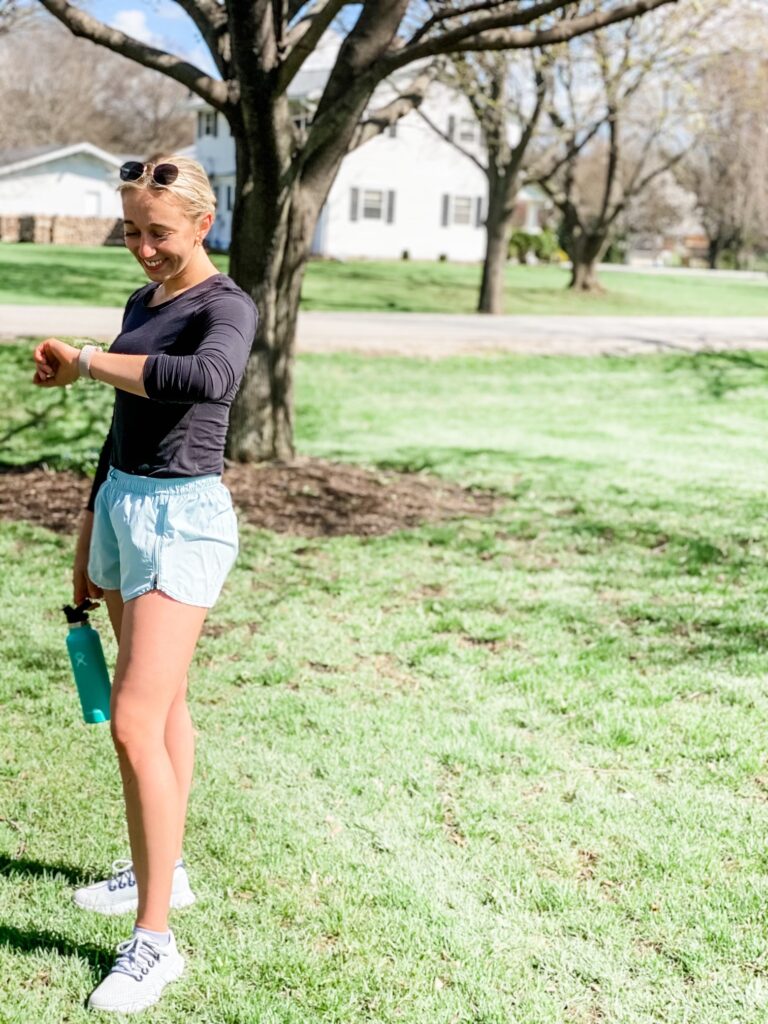
It also helps to put on something that preps you to workout. Here my easy transition from house work to working out:

fitness expert mequon wisconsin

 
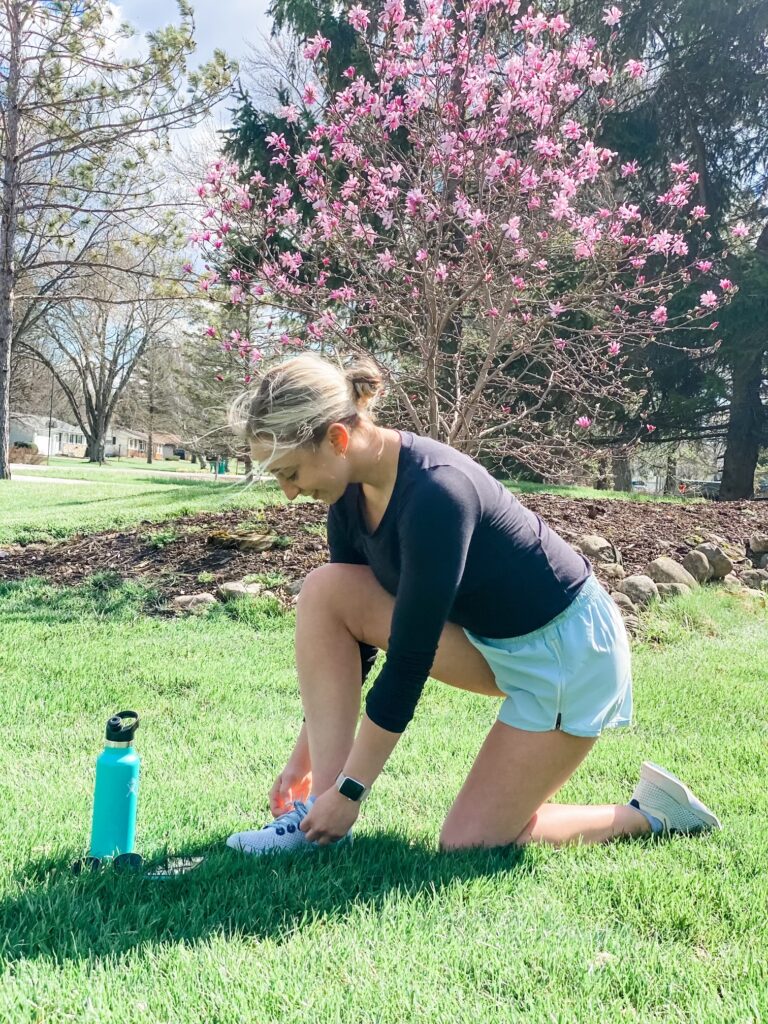
A lot of people love a leggings and tank top combo, but I am the EXACT opposite. I hate being restricted in leggings when I work out, but I love being cozy in a long sleeve. Here’s my favorite combo for those spring days when its too hot for pants, but too cold for a tank!
 
Also, check out my new Allbirds! This shoe has been great for walks, workouts, and being on my feet all day. I am obsessed with the design and love that they are made out of recycled materials!
 
Some of the links below are commissionable. That means I may make a commission when you use them. There is no cost to you and your support is appreciated!

Shop the Look

Keep it simple!!

personal trainer mequon wisconsin

The less equipment, traveling, and set-up you have to do for your fail-proof workout the better! If it is going to require you to set up an entire station than it will just give you another excuse not to do it. If you can grab a change of clothes and have no equipment you can just get up and go!

I shared my go to gym workout in this article. Maybe you will love it too!

Also, pick exercises that you have done before and are familiar with. This will allow you to flow through the workout without having to pause to look up form and wonder if you are doing everything correctly. The more you know and enjoy the exercises you pick, the more likely you are to follow through with your workout.

Pick the right time of day

fitness blogger mequon wisconsin

This one may seem counterintuitive, but finding the time of day where you are at your best is a large part of getting yourself to do your workout. If you are not an early riser, don’t force yourself to get up at 5 am. You will only end up disappointed in yourself that you hit snooze. If you know you get lethargic after lunch, don’t try and squeeze in a workout in the early afternoon. Find times that fit into your lifestyle!

I am not saying you should never try and change your habits, but we are looking to be successful in our fitness journey! And this means setting realistic goals. Life, as well as workout routines, are never going to be as perfect as we want them to be. So pick the time of day where you know you have a bit of extra time and energy to get after your workout.

Discover technique tips to get the most out of your workout.

WHAT TO DO

fitness blogger mequon wisconsin

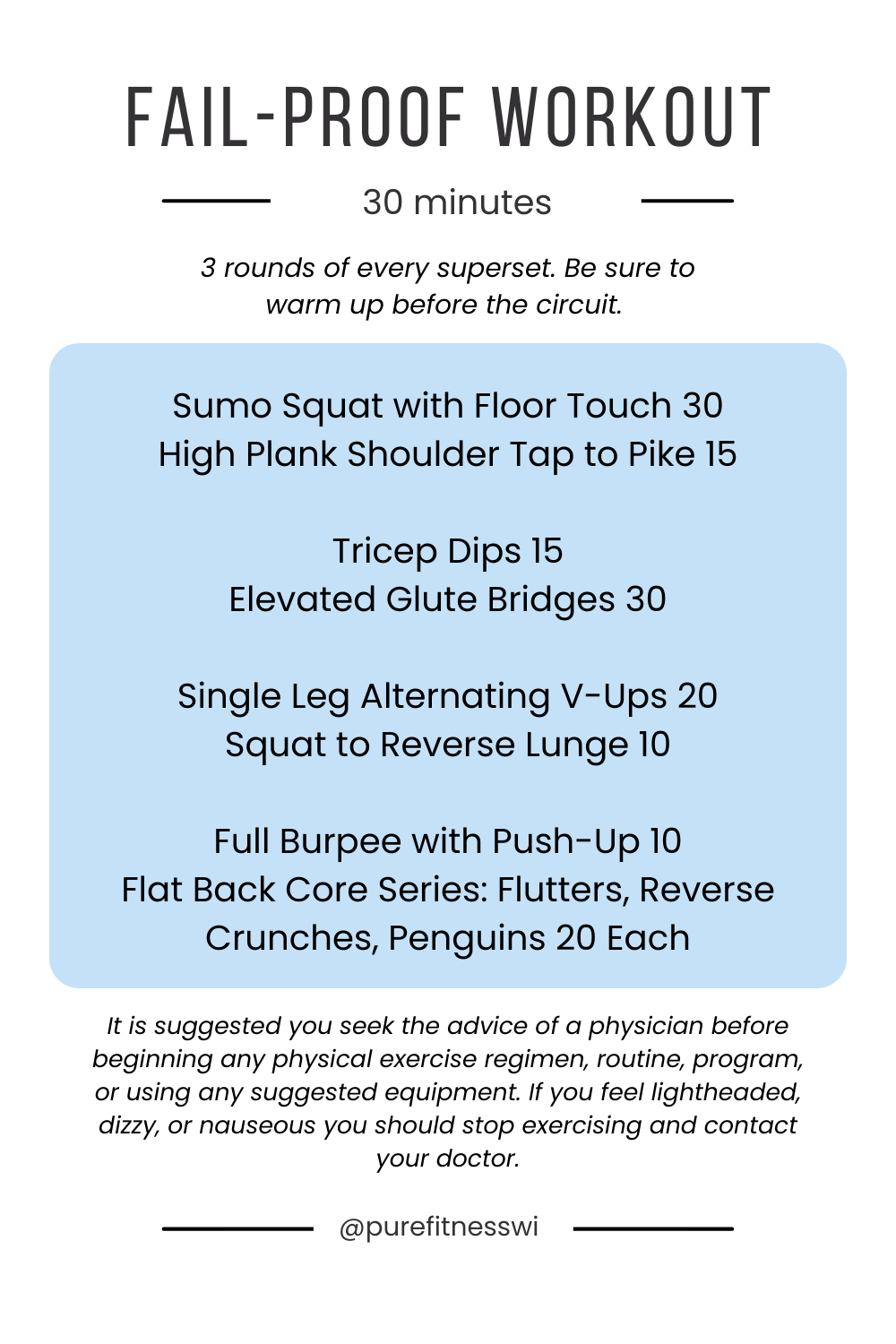
I had mentioned picking exercises that are familiar, require little to no equipment and that you tend to enjoy. This is going to be your recipe card for building a fail-proof workout. I am not going to leave you out to dry here. I want to show you what I include in my fail-proof workout for a busy day!

To start the workout, I am going to offer up a bit of advice. Start your workout with a 5 to 10 minute walk. Why? My number one reasoning would be to get away from your work (either your job or your chores). I find that physically stepping outside or even to a treadmill can help you mentally step away from the task at hand. Plus, it allows you to warm up your muscles to get ready to workout.

*If it is middle of winter and you don’t have a treadmill, just try some active mobility to start. You can learn how to use the TRX for mobility here.

WORKOUT

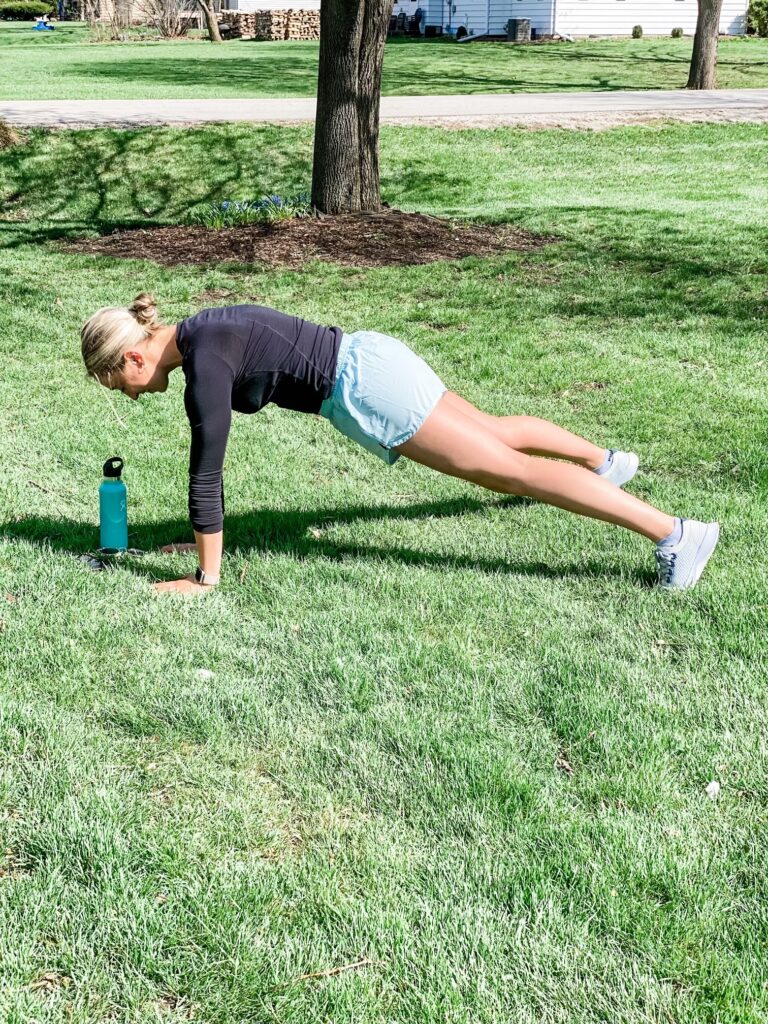
Now when it comes to exercise selection, I have put together a group of exercises that are all body weight and can pretty much be done anywhere. They are going to be higher rep to challenge yourself and get your heart rate up more. I tend to lose focus quickly in a workout so I like to keep things fresh by doing a quick superset and moving on.


WRAPPING IT UP

Just a reminder that this workout is custom built for me. It is important to customize your own fail-proof workout that will without a doubt get you going. Try starting with mine, see what you like and add or modify for next time. And be sure to add a cool down of stretching those problem areas for you.

Do you plan out every single part of your day? Do you keep a detailed, color-coded planner? Do you wake up in the morning and immediately start making a to-do list? If you are anything like me, then all of the answers to these questions are yes. And workouts are no exception to this planning process.

The great part about this is that you know exactly how much time it will take so that you can have that in your back pocket for a busy day!

Oh, and if you are wondering, yes I am an Enneagram 6. And if you don’t know you can find out more about enneagram types and your workouts here. Now, go build your fail proof workout!

How to Build a Consistent Workout Routine in 30 Days

How to Build a Consistent Workout Routine in 30 Days

Establishing a consistent workout routine can feel overwhelming, especially if you’ve struggled with consistency in the past. Whether you’re a beginner or looking to get back on track, creating a routine that sticks is key to achieving your health and fitness goals....

read more
Minimalistic Home Gym Essentials: What You Really Need

Minimalistic Home Gym Essentials: What You Really Need

Minimalist me is a mix of a passion for organization, functional accessibility and efficiency. More is not always better in a gym and how you select, store and use your gym equipment is the key to having a minimalistic home gym. I have picked 7 minimalistic home gym...

read more
Discipline in Fitness: How to Achieve Your Goals

Discipline in Fitness: How to Achieve Your Goals

After many years of working out and hearing the same question, “how do you motivate yourself to workout everyday?” I have a not-so-secret secret to share… It isn't about motivation. It is about discipline.  While motivation might get you started on your fitness...
read more
fitness articles
lifestyle articles
nutrition articles
golf articles

SUBSCRIBE

Click to sign-up for weekly information and offers.

DISCLOSURE

We are a participant in the Amazon Services LLC Associates Program, an affiliate advertising program designed to provide a means for us to earn fees by linking to Amazon.com and affiliated sites.